
Pallet Rack Safety
Best Practices for Installation and Use – Ensuring Workplace Safety and Operational Efficiency

Pallet racks are the backbone of any distribution or warehouse centre. They hold heavy loads, organize inventory, and allow forklifts to move quickly through aisles. However, these pallet racks can become a serious safety concern if they aren’t installed or used properly. If pallet racks collapse, they not only damage your goods and packaging boxes, but also may injure your employees or momentarily shut down your operations. In this article, we’ll discuss the best practices to install pallet racks safely and the ways to use them.
Types of Pallet Rack Systems
Before we begin, let’s take a look at the types of pallet rack systems available:
Selective Racks
These are the most common type of pallet racks. Each of these pallets has a separate spot but their aisles must be wide enough for a forklift to pass through easily.
Drive-in and Drive-through Racks
These racks are floor space savers since they allow forklifts to drive directly into the rack system. These are great for storing your ecommerce packaging boxes and product storage.
Push-back Racks
This pallet system works like a sliding shelf system. It uses wheeled carts on rails to move about.
Pallet Flow Racks
These racks use roller tracks and the force of gravity. You load pallets at the back, and they roll forward to the front for easy picking.
Planning Before Installation
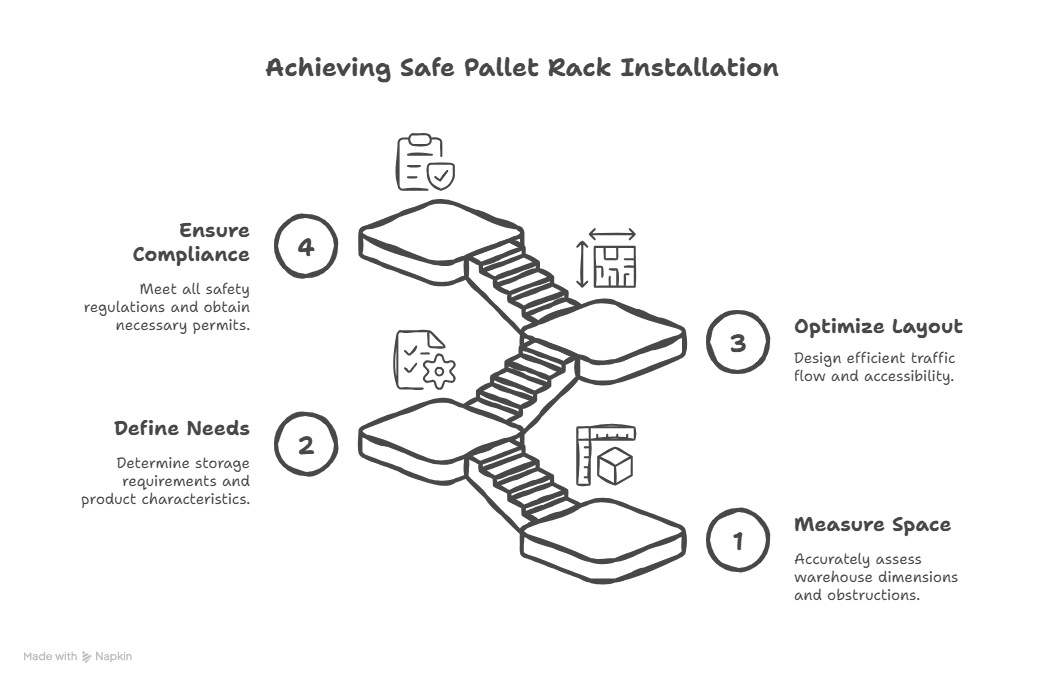
Every safe pallet rack installation starts with careful and meticulous planning.
-
Measure Your Warehouse SpaceTake into account the height of the ceiling, floor levelness, and any obstructions in the way, like beams or ducts. The floor needs to be sturdy enough to support the weight of the racks and the loads on it. If you live in an area with heavier seismic activity, you might need to invest in extra bracing for safety.
-
Define Your Storage NeedsWhat products will you be storing in these racks? Are you storing packaging? Are they custom, reinforced, or shipping boxes? Will pallets be rotated on a first-in-first-out (FIFO) or last-in-first-out (LIFO) basis? This will help you determine the rack style, beam spacing, and overall height.
-
Design the LayoutThe aisles need to allow forklifts to move around without hitting the uprights. You also need to be careful not to block any fire exits, sprinkler systems, or emergency routes. Local building codes often include a set minimum aisle width and clearances. This can help you greatly understand the layout and set it up accordingly.
-
Confirm Compliance RequirementsMany regions require permits for rack systems above a certain height. Post your load capacities, plan for anchoring, and follow OSHA or local codes as part of the design phase, not as an afterthought.
Preparing the Site
Now that you’ve planned out your pallet setup, you need to prepare the site itself.
- Take your time to inspect all rack parts. Discard any bent uprights or cracked beams so they won’t accidentally be used up.
- Gather up all your right tools. These will include levels, chalk lines, drills, and anchors. You need to have an ample amount of trained staff available for this task, since racks are not safe to install alone.
- Clear the floor of any debris and verify that it’s a levelled surface. Then mark the rack lines with chalk so you space them correctly.
- While installing the pallet racks, make sure your team is adequately equipped with safety must-haves: helmets, gloves, steel-toed boots, and high-visibility vests.
Step-by-Step Installation
With the plan laid out and the site prepped, the next thing on the list is the actual installation. Here is a simple, step-by-step guide you can follow to achieve a seamless and safe pallet rack install:
- Begin by laying out all upright frame components. Then assemble the uprights by attaching the bracings and footplates. Keep the bolts snug but not fully tightened until alignment is checked.
- Move the upright frames into the previously marked positions on the floor. Use a level or plumb line to confirm that they are perfectly vertical. Temporarily brace them so they stay stable through the process.
- Next, position the first beam at the correct height and lock it into the uprights, making sure the safety clips or pins engage fully.
- Continue adding beams. Check with a level each time to make sure they sit straight. Keep the spacing consistent so pallets will fit safely.
- After the beams are in, add decking or pallet supports as needed. This step improves stability and prevents the pallets from falling through.
- Go back over the entire structure to tighten bolts, confirm all locks are engaged, and make sure the racks are square and level before anchoring the frames to the floor.
- Finish off by checking all connections and walking the system for alignment. The racks should feel solid with no looseness or wobble.
Once you’ve checked the stability and alignment of the racks, follow up by loading them with your pallets.
Safe Use
- Schedule regular inspections and keep an eye out for bent beams, cracked welds, or loose anchors. Even minor damage should be reported and fixed before the rack is used again.
- Always follow load limits strictly. Never exceed the posted capacity, and distribute weight evenly across beams.
- Train your forklift drivers to slow down near racks and avoid hitting uprights. Make use of guardrails or column protectors where needed.
- Make sure you’re constantly maintaining all components of the rack system.
Conclusion
Pallet racks are the most efficient tool in a warehouse, but only when they are installed with safety in mind. A collapsed rack is not just an equipment failure, it is also a workplace hazard. Make sure your pallet rack installation is safety focused.
Some installations should not be attempted without expert help. If you’re in doubt, call in professional help from Material Handling USA for only the best pallet design for your custom size boxes!