Top 10 Questions About Pallet Rack

Unlock the Secrets of Pallet Racking:
Your Ultimate Guide Awaits!

Attention Warehouse Managers and Business Owners!

Selecting the right pallet rack system is one of the most critical decisions for any warehouse or distribution center. A well-designed system maximizes storage density, streamlines workflow, and ensures a safe environment for employees. However, the number of options and technical considerations can be overwhelming.

This guide provides clear, detailed answers to the ten most common questions warehouse managers ask about pallet racking. Use this information to make informed decisions and build a storage system that meets your specific operational needs.

Top Searched Pallet Rack Catagories

Don't settle for a one-size-fits-all solution or navigate this complex decision-making process alone.

Reach out to the experts who are just a call away at 800-326-4403. Ensure you’re investing wisely in a system that grows with you, safeguarding not just your goods, but your future.

Navigating Pallet Rack Capacities for Optimal Warehouse Performance

Deciphering the load-bearing capabilities of pallet racks is paramount for warehouse managers seeking to maximize storage safety and efficiency. The strength of a pallet rack is influenced by a myriad of factors, such as its design, material quality, and how the beams are arranged. Typically, a pallet rack can support a hefty load, with each shelf capable of holding up several thousand pounds. For environments requiring robust storage solutions, there are heavy-duty racks designed to manage loads exceeding 10,000 pounds on each level. To put this into perspective, that’s equivalent to the weight of about three average-sized cars, catering to a diverse range of storage needs from lightweight inventory to substantial equipment.

To precisely determine the load capacity of your pallet racking system, an understanding of the maximum anticipated weight for each beam level is essential. This figure should be multiplied by the total number of levels within a single racking unit to ascertain the overall capacity needed for each upright frame. Such calculations ensure your setup is equipped to handle your storage requirements safely and efficiently, avoiding the pitfalls of overloading.

When it comes to adhering to safety standards, it’s important to note the stance of regulatory bodies like OSHA. While OSHA itself does not specify exact capacity guidelines for pallet racks, it defers to the standards established by the American National Standards Institute (ANSI), particularly outlined in the MATERIAL HANDLING USA 16.1-2023 standard. These comprehensive guidelines detail the requisite design, testing, and application protocols for pallet racking systems, ensuring they meet rigorous safety and performance criteria.

Embarking on this journey solo can lead to costly miscalculations, either in terms of underused potential or hazardous overloading. Expert guidance can illuminate the path to a racking solution that harmoniously blends capacity with safety, tailored perfectly to your operational needs. By reaching out to a knowledgeable professional at 800-326-4403, you can unlock a bespoke pallet racking strategy that elevates your warehouse’s functionality and safety to new heights.

Question #1

What type of pallet rack should I use?

Tall industrial warehouse shelving with green and orange metal frames features multiple levels of wire mesh shelves. These empty shelves, often seen in top types of pallet racking, extend vertically towards a high ceiling with concrete walls in the background.

The ideal pallet rack system depends on your inventory, space, budget, and desired inventory rotation method. Here are the most common types:

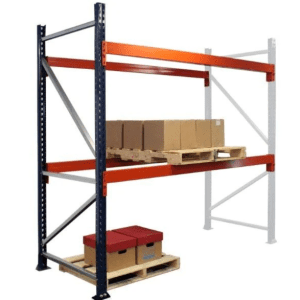
  • Selective Pallet Rack: This is the most popular and versatile type. It provides direct access to every pallet, making it perfect for operations with a high number of different SKUs and low quantities of each. It is affordable and easy to install.

  • Drive-In / Drive-Thru Rack: This system offers extremely high storage density by allowing forklifts to drive directly into the racking structure. It is ideal for storing large quantities of the same product and works on a Last-In, First-Out (LIFO) basis.

  • Push Back Rack: A high-density LIFO system where pallets are stored on nested carts that ride on inclined rails. This offers better selectivity than drive-in racking because each lane can store a different SKU.

  • Pallet Flow Rack: This high-density system uses a First-In, First-Out (FIFO) method. Pallets are loaded from one end and flow down on rollers to the other for picking. It is essential for perishable goods or products with expiration dates.

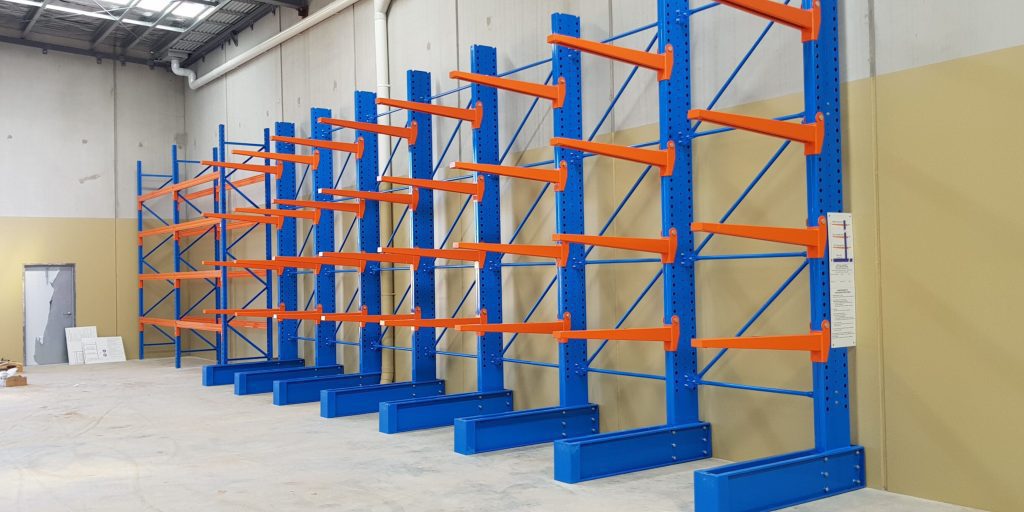
  • Cantilever Rack: Designed specifically for long, bulky, or irregularly shaped items like lumber, pipe, or furniture. It uses arms instead of traditional shelves, providing unobstructed horizontal storage.

For a more detailed comparison, you can read our Comprehensive Guide to Selecting Pallet Rack for Your Warehouse.

Question #2

How much weight can a pallet rack hold?

Pallet rack capacity is not a single number; it is a calculation based on several factors. While a standard beam can typically hold several thousand pounds, heavy-duty systems can be engineered to support over 10,000 pounds per level.

The two critical capacity ratings are:

  • Beam Capacity: This is the maximum uniformly distributed weight a pair of beams can support. This rating is usually stated per pair.

  • Upright Frame Capacity: This is the maximum weight a single upright frame can support. This is calculated by adding the total weight of all beam levels in one bay and multiplying by the number of bays supported by the frame.

It is crucial to note that OSHA defers to the standards set by the American National Standards Institute (ANSI) and the Rack Manufacturers Institute (RMI). These standards require that load capacity plaques are clearly displayed on the racking system. Never exceed the stated capacities.

The warehouse interior showcases empty green and orange metal storage racks, hinting at types of pallet racking for adaptable solutions. The concrete floor complements wooden crates, and the industrial lighting highlights exposed shelving, perfect for custom pallet rack systems.

Question #3

How do I determine the right size (height, width, and depth) for my needs?

Stacks of green metal scaffolding resemble custom pallet rack systems, neatly arranged against a clear blue sky. The symmetrical alignment covers a large portion of the image, while the concrete ground contrasts with the orderly pattern above.

Properly sizing your pallet rack involves more than just measuring your warehouse. Key factors include:

  • Pallet and Product Dimensions: Your rack depth and beam length (width) must accommodate your largest pallet size, allowing for a few inches of clearance on each side.

  • Building Specifications: The maximum rack height is limited by your building’s clear ceiling height, ensuring you leave adequate space for fire suppression sprinkler systems (typically at least 18 inches).

  • Forklift Specifications: Your aisle width is determined by the turning radius of your forklift. Standard counterbalance forklifts require wider aisles (12+ feet), while reach trucks or turret trucks can operate in much narrower aisles.

  • Beam Levels: The vertical distance between beam levels is determined by the height of your pallet load plus the height of the beam itself, with an additional 4-6 inches of lift clearance.

Question #4

What are the essential safety features for pallet rack?

Safety is paramount in any warehouse environment. Several accessories are designed to protect your racking system and your employees.

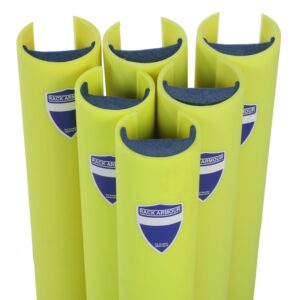
  • Column Protectors: These are steel guards installed around the base of the upright frames to absorb impacts from forklifts, preventing costly and dangerous frame damage. Learn more about forklift pallet rack protection.

  • Floor Anchors: All pallet rack systems must be securely anchored to the concrete floor slab to ensure stability and prevent tipping.

  • Wire Mesh Decking: Pallet rack wire decking sits on the beams to create a shelf surface. It prevents pallets or loose items from falling through and improves overhead visibility.

  • Safety Netting: Installed on the back of racks, pallet rack safety netting is a flexible barrier that catches any items that might be accidentally pushed off the back.

For a complete overview, review these 7 Essential Pallet Rack Safety Guidelines for Warehouses.

A warehouse interior features a red SkyJack scissor lift parked beside tall, empty blue metal shelving units—part of custom pallet rack systems. The white floor shows visible cords, and the high ceiling boasts beams and overhead lighting, emphasizing pallet rack safety features.

Question #5

Can pallet rack be customized?

A wide warehouse aisle between tall shelving units stacked with packaged goods on pallets; a forklift is visible in the distance, and the brightly lit space reflects OSHA compliant warehouse design for optimal pallet rack safety standards.

Yes, one of the greatest strengths of modern pallet rack is its modularity. Systems can be fully customized to fit your exact needs. Customization options include upright height, frame depth, beam length, beam capacity, and even paint color to match your company’s branding.

Question #6

Do I need a professional for installation?

While small, simple systems can sometimes be installed in-house, professional installation is highly recommended for most applications. Professionals ensure the rack is assembled according to the manufacturer’s specifications, is plumb and level, and is anchored correctly. Most importantly, professional installers are knowledgeable about local building codes, including seismic requirements, which often mandate a permit for installation.

Blue and orange industrial cantilever racks are installed along a beige wall in a spacious warehouse with a concrete floor and high ceiling. The racks are empty and ready for storage use.

Question #7

How do I properly maintain my pallet rack?

An empty warehouse with orange and blue metal shelving units stands in open space, revealing high ceilings and a concrete floor. A blue mobile lift is positioned on the left side, highlighting key pallet rack safety features essential for efficient operations.

Regular inspection and maintenance are key to ensuring the longevity and safety of your system. A good maintenance program includes:

  • Regular Visual Inspections: Designate a qualified person to regularly walk through the warehouse and inspect racks for visible damage, such as dented uprights, bent beams, or missing safety clips.

  • Immediate Repair: Any damaged component should be immediately unloaded and reported for repair or replacement. A damaged component has a compromised capacity and poses a serious risk.

  • Ensure Proper Use: Train forklift operators to load and unload pallets carefully and to report any impacts immediately.


Question #8

How long does pallet rack last?

A high-quality pallet rack system that is properly maintained and not subjected to damage can last for 20 years or more. The primary factor that shortens a rack’s lifespan is repeated impact from material handling equipment. Age is less of a factor than condition.

Question #9

What is the typical lead time for pallet rack orders?

The warehouse interior showcases high stacks of wooden crates on robust orange and blue metal shelves, highlighting the importance of pallet rack safety features. A yellow overhead crane is suspended above, enhancing the spaciousness with its high ceiling and large, light-flooded windows.

Lead times can vary widely. Common sizes and types of racking are often in-stock and can be shipped within a few business days. However, large projects, custom-engineered systems, or specialty racks will have longer lead times, often ranging from 8 to 16 weeks.

Question #10

How much does pallet rack cost and how can I get a quote?

The cost of pallet rack depends entirely on the type, dimensions, capacity, and quantity. There is no flat price. The best way to determine the cost for your project is to request a quote from a qualified supplier. A good quote will be based on a detailed understanding of your requirements and will include the cost of materials, delivery, and professional installation.

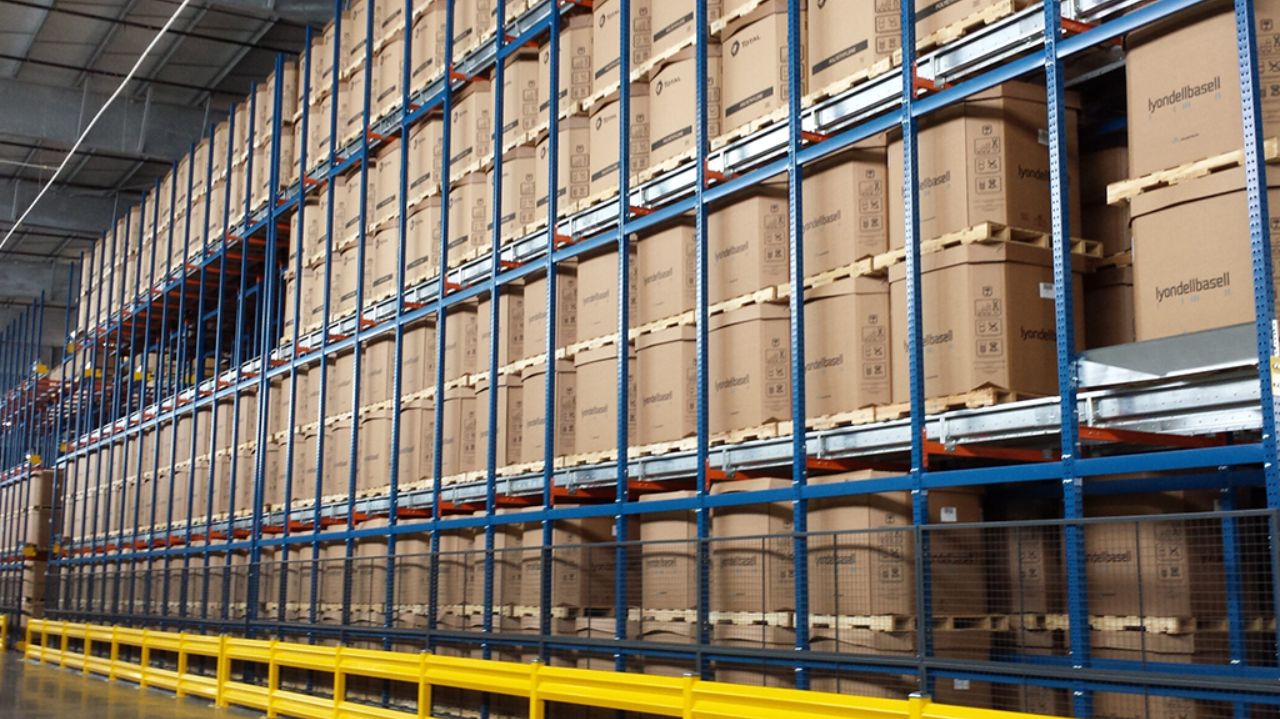
Large warehouse features tall blue and orange metal racks in a narrow aisle racking layout, stacked with neatly organized brown cardboard boxes on wooden pallets. A yellow safety barrier runs along these high-density storage solutions.

Why Choose Us

Over 30 Years Of Experience

We design and install the right storage solutions for your specific needs

Custom Options

We offer a range of customizable options to meet your unique needs

Customer Satisfaction

We are committed to excellent service and support, ensuring satisfaction with every purchase

Competitive Pricing

We offers competitive pricing, making it easy to find a solution that fits any budget

Related Products

Packaging Options For Your Inventory.

Material Hanling USA – Pallet Rack Specifications

NationWide Shelving offers high-quality, tear-drop design pallet racks compatible with major manufacturers such as Interlake, Space Rack, USP, Lodi Metal-Tech, Steel King, and Husky.

Key Features & Specifications

  • Uprights:

    • Regular Duty: 16-gauge steel, 16,100 lbs. capacity per upright.
    • Heavy Duty: 14-gauge steel, 23,300 lbs. capacity per upright.
    • New 3” x 3” column design with 5” x 8” seismic base plates for stability.
    • Bolt-together design allows easy replacement of damaged components.
  • Beams:

    • Improved safety clip for easy replacement.
    • Adjustable every 2 inches for flexibility.
    • 3.5”, 4”, and 5” beams use 3-pin connectors, 6” beams use 4-pin connectors.
  • Decking Options:

    • Wire Mesh Decking: Reduces dust, improves light circulation, and increases sprinkler efficiency.
    • Steel Safety Supports: Provide extra reinforcement for pallets and hand-stacking applications.
  • Accessories:

    • Bay Dividers: Vertical organization with easy installation.
    • Frame Guards: Protect rack columns with heavy-duty steel construction.
    • Label Holders: Adhesive and magnetic holders for quick relabeling.

Installation & Durability

  • Designed for forklift access and heavy-duty hand stacking.
  • Available assembled or K.D. (knocked down) for flexible shipping.
  • High-visibility color-coded system: Light green uprights, orange beams.