
Spill Control and Secondary Containment
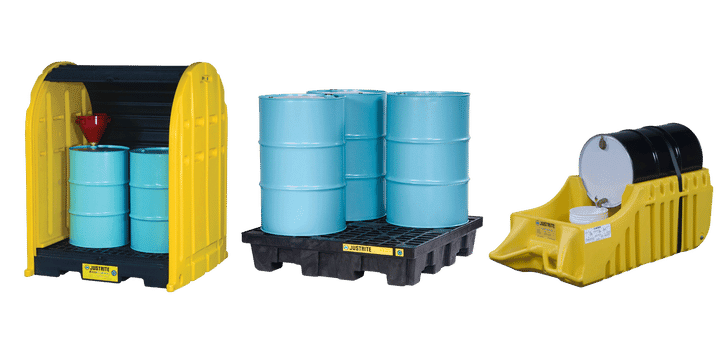
What Is Spill Control and Secondary Containment?
Spill control refers to the products, systems, and procedures used to prevent, contain, and clean up spills of hazardous liquids, chemicals, oils, and other materials in industrial, commercial, and laboratory environments. For how containment and racking are planned together in a chemical distribution warehouse, see our chemical and pesticide warehouse racking case study. For how drums and IBC totes are carried on racking, and how containment is designed into the bays, see our drum and IBC storage racking case study.
Secondary containment is a regulatory requirement (EPA 40 CFR 264.175 and OSHA 29 CFR 1910.106) that mandates a backup containment system for any primary container holding hazardous materials. If the primary container leaks or ruptures, the secondary containment system captures the spill and prevents environmental contamination.
Proper spill control protects employees from chemical exposure, prevents groundwater and soil contamination, avoids costly cleanup and fines, and keeps your facility in compliance with federal, state, and local regulations.
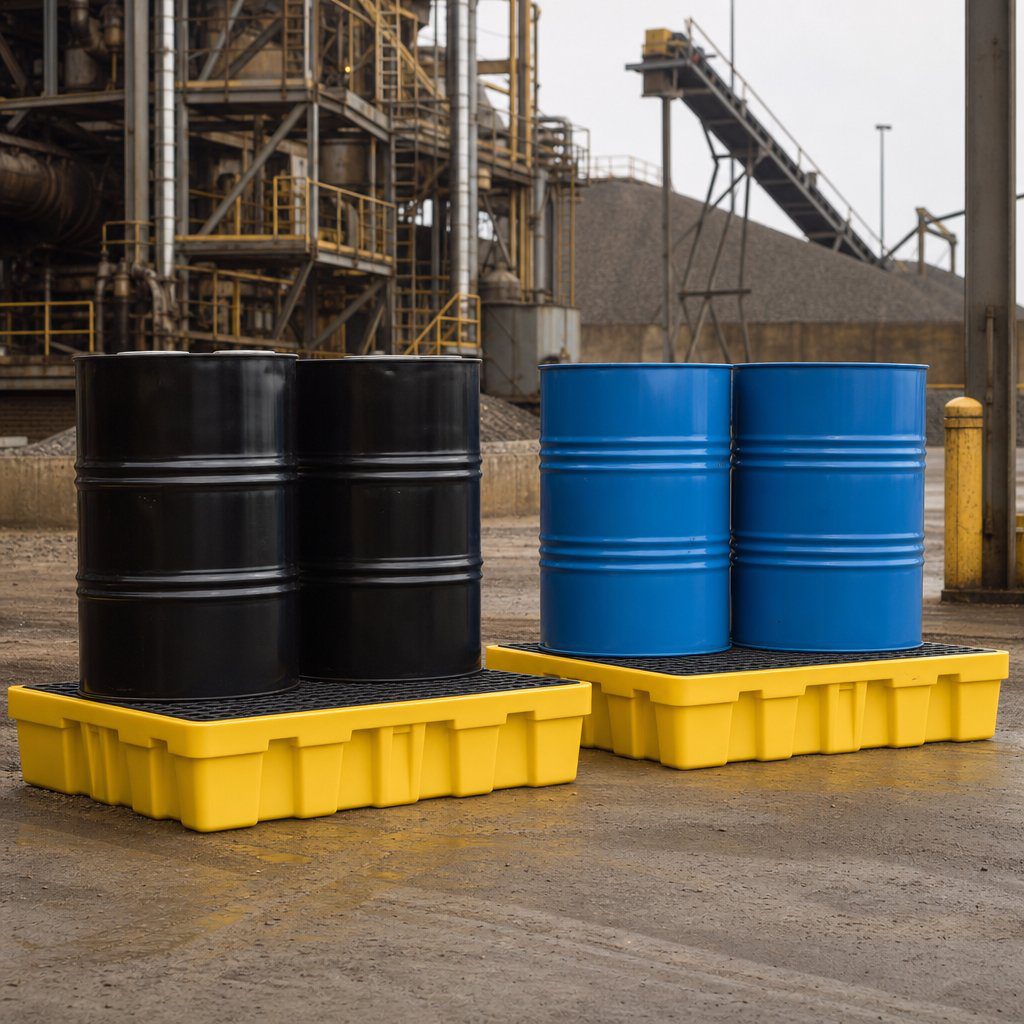

Why Spill Control and Secondary Containment Matter
Spill control and secondary containment are not just about protecting your floors — they are essential for workplace safety, environmental responsibility, and legal compliance.
Hazardous leaks and spills create dangerous conditions that lead to slip-and-fall accidents, chemical burns, respiratory exposure, costly downtime, and injury-related expenses. Beyond safety, improper handling of hazardous materials risks significant environmental harm and can result in fines for non-compliance with SPCC (Spill Prevention, Control, and Countermeasure) regulations.
Facilities that store oil above EPA threshold quantities must maintain a written SPCC plan. Secondary containment is a core component of that plan, and failure to comply can lead to penalties exceeding $50,000 per day per violation.
Spill Containment Products
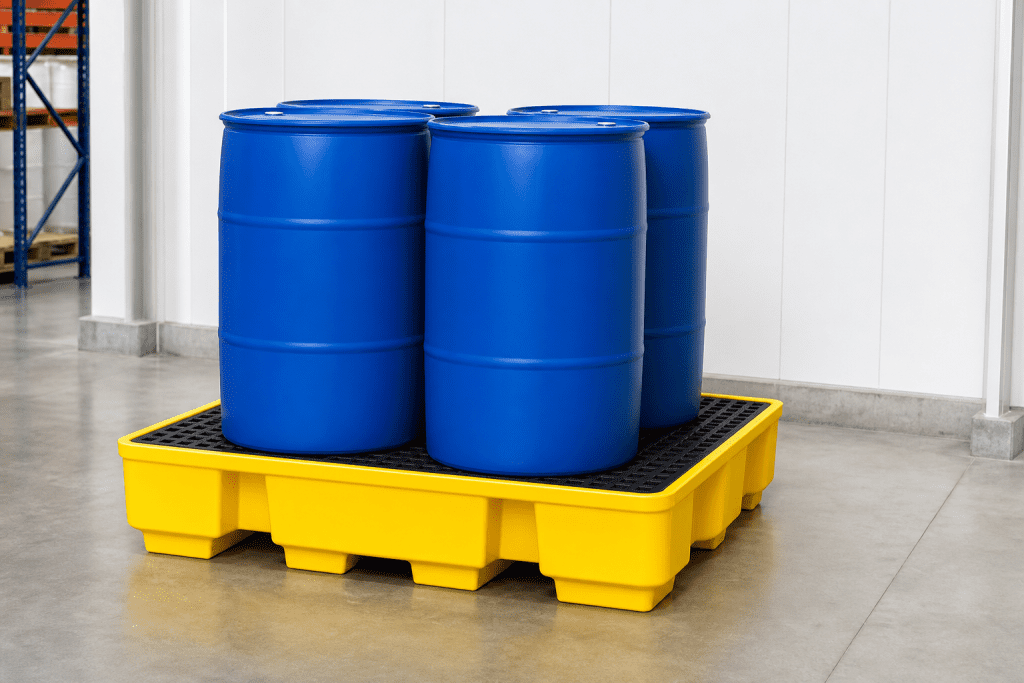
Spill Containment Pallets
Polyethylene and steel pallets that hold 1, 2, or 4 drums with built-in sumps to capture leaks and drips. Available in standard and low-profile configurations with removable grates for easy cleaning.

IBC Spill Containment
Large-capacity containment pallets designed for 275-gallon and 330-gallon IBC totes. Reinforced construction supports heavy loads while providing full secondary containment for bulk liquid storage.
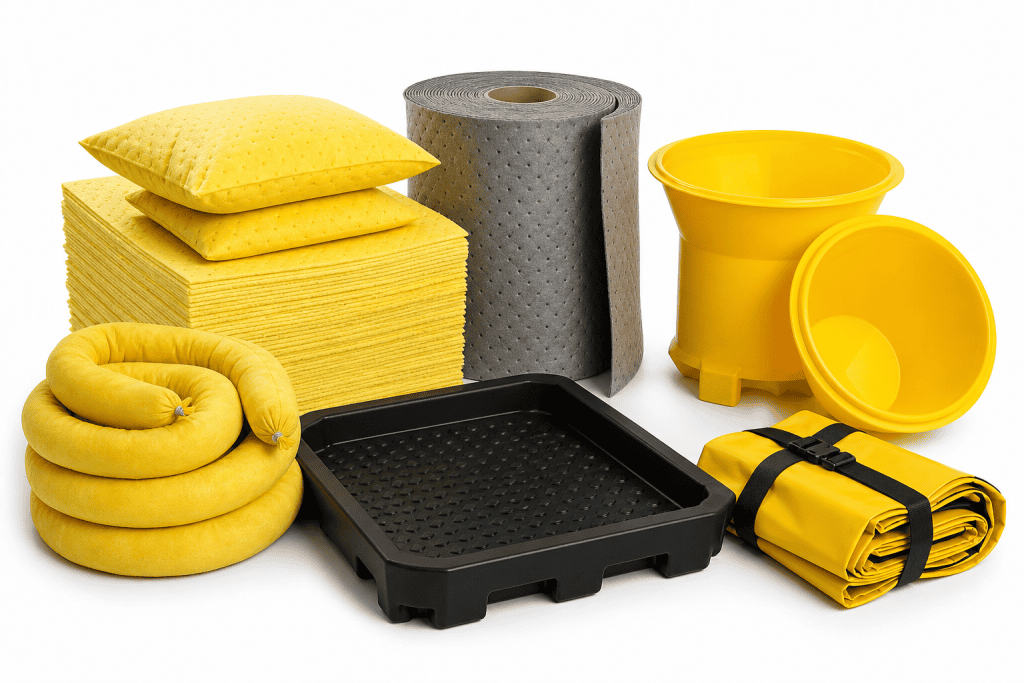
Berms, Absorbents, and Accessories
Spill berms and portable containment, drum funnels and covers, absorbent pads, rolls, and pillows, drip pans and trays, deck and floor drains, stacking drum racks with containment, and wall-mount containment shelves.
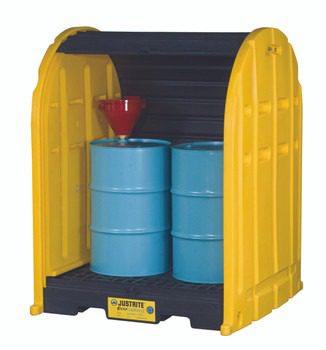
Collapsible Berms
Drive-through collapsible berms allow easy containment of leaks and spills from vehicles and machinery. Portable and flexible, these berms are ideal for temporary setups and quick deployments at job sites, loading docks, and maintenance areas.
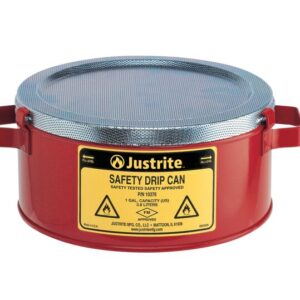
Drip and Leak Protection
Drip pans, accumulation centers, and leak protection products for containing small, accidental spills from machinery and containers. Justrite EcoPolyBlend™ polyethylene accumulation centers keep workplaces safe and organized.

Stormwater Control
Specialized drain covers, berms, and containment systems that prevent contaminated stormwater runoff from escaping industrial sites. Designed to handle heavy rain while keeping hazardous materials out of the water supply.
Justrite Safety Cabinets and Cans
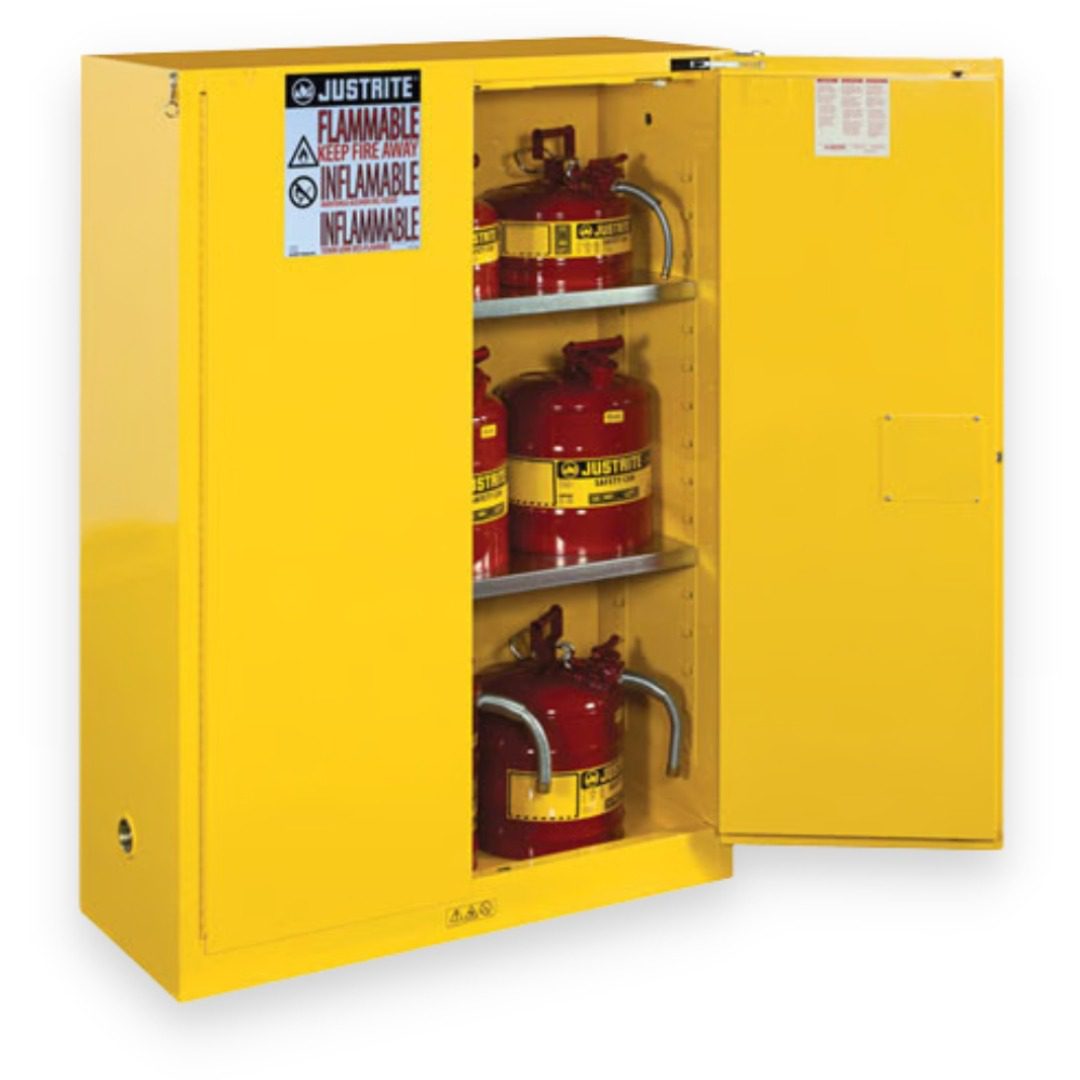
Flammable Safety Cabinets
OSHA and NFPA compliant flammable liquid storage cabinets. Available in 12 to 90 gallon capacities with self-closing doors, adjustable shelves, and built-in vents. Protects personnel and property from flash fires.

Acid and Corrosive Cabinets
Specially designed cabinets for storing acids, bases, and corrosive chemicals. Polyethylene-lined interiors resist chemical attack, while separate compartments prevent incompatible chemicals from reacting.

Chemcor Cabinets
Justrite Chemcor cabinets feature corrosion-resistant construction for storing aggressive chemicals. Dual-wall, 18-gauge steel with a chemical-resistant coating extends cabinet life in harsh laboratory and industrial environments.

Type I Safety Cans
FM-approved and UL-listed safety cans for safe storage and dispensing of flammable liquids. Spring-close lid, flame arrester, and pressure-relief mechanism prevent ignition and reduce vapor emissions.
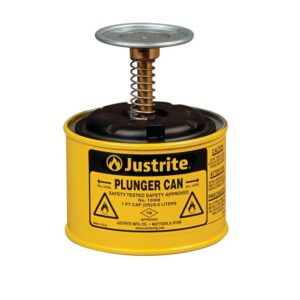
Plunger Cans
One-hand dispensing cans for wetting cloths and swabs with flammable solvents. The plunger mechanism controls the amount dispensed, reducing waste and minimizing vapor exposure in cleaning and degreasing operations.
Spill Kits
Ready-to-deploy spill kits for oil, chemical, and universal spill response. Includes absorbent pads, socks, pillows, and disposal bags in portable containers. Available in sizes from small drum-top kits to 95-gallon overpack kits.
Who Needs Spill Containment?
Manufacturing
Chemical processing, machining fluids, solvents, paints, and industrial lubricants.
Laboratories
Chemical reagents, acids, bases, and biological hazards in research and clinical labs.
Warehouses
Bulk storage of oils, cleaners, chemicals, and other hazardous materials in distribution centers.
Fuel Storage
Gasoline, diesel, kerosene, and aviation fuel storage and dispensing areas.
Healthcare
Pharmaceutical manufacturing, compounding pharmacies, and hospital chemical storage.
Automotive
Motor oil, transmission fluid, brake fluid, and used oil storage in service shops and dealerships.
How to Implement an Effective Spill Control Strategy
Identify Hazards
Assess the hazardous materials in your facility, including the types, volumes, and locations of chemicals stored. Determine which areas require primary and secondary containment.
Choose the Right Products
Select containment and spill control products tailored to your facility — spill pallets for drums, IBC containment for totes, berms for vehicle areas, and safety cabinets for flammable or corrosive chemicals.
Train Your Team
Ensure employees understand the risks of hazardous materials, know how to use spill containment equipment, and can execute emergency spill response procedures quickly and safely.
Inspect Regularly
Schedule routine inspections of all containment systems, safety cabinets, and spill kits. Replace damaged or worn products promptly and document all inspections for compliance records.
Maintain Your SPCC Plan
Facilities storing oil above EPA thresholds must maintain a written SPCC plan. Update it whenever your operations, stored materials, or facility layout changes. Ensure the plan is accessible to all employees.
Document Everything
Keep records of spill events, training sessions, equipment inspections, and plan updates. Thorough documentation demonstrates compliance during audits and reduces liability in the event of an incident.
Frequently Asked Questions
What regulations require secondary containment?
What is secondary containment, and why is it important?
What size containment pallet do I need?
What materials are containment pallets made from?
Which spill control products should I use for small leaks?
Can spill containment pallets be used outdoors?
Can I use collapsible berms for mobile equipment?
How can I ensure compliance with SPCC regulations?
How do I clean and maintain spill containment products?
Stay Compliant — Get the Right Containment
Contact Material Handling USA for expert guidance on spill control products, secondary containment requirements, and EPA/OSHA compliance.