
Material Handling / Janitorial Equipment & Supplies
Janitorial Equipment & Supplies for Commercial Facilities
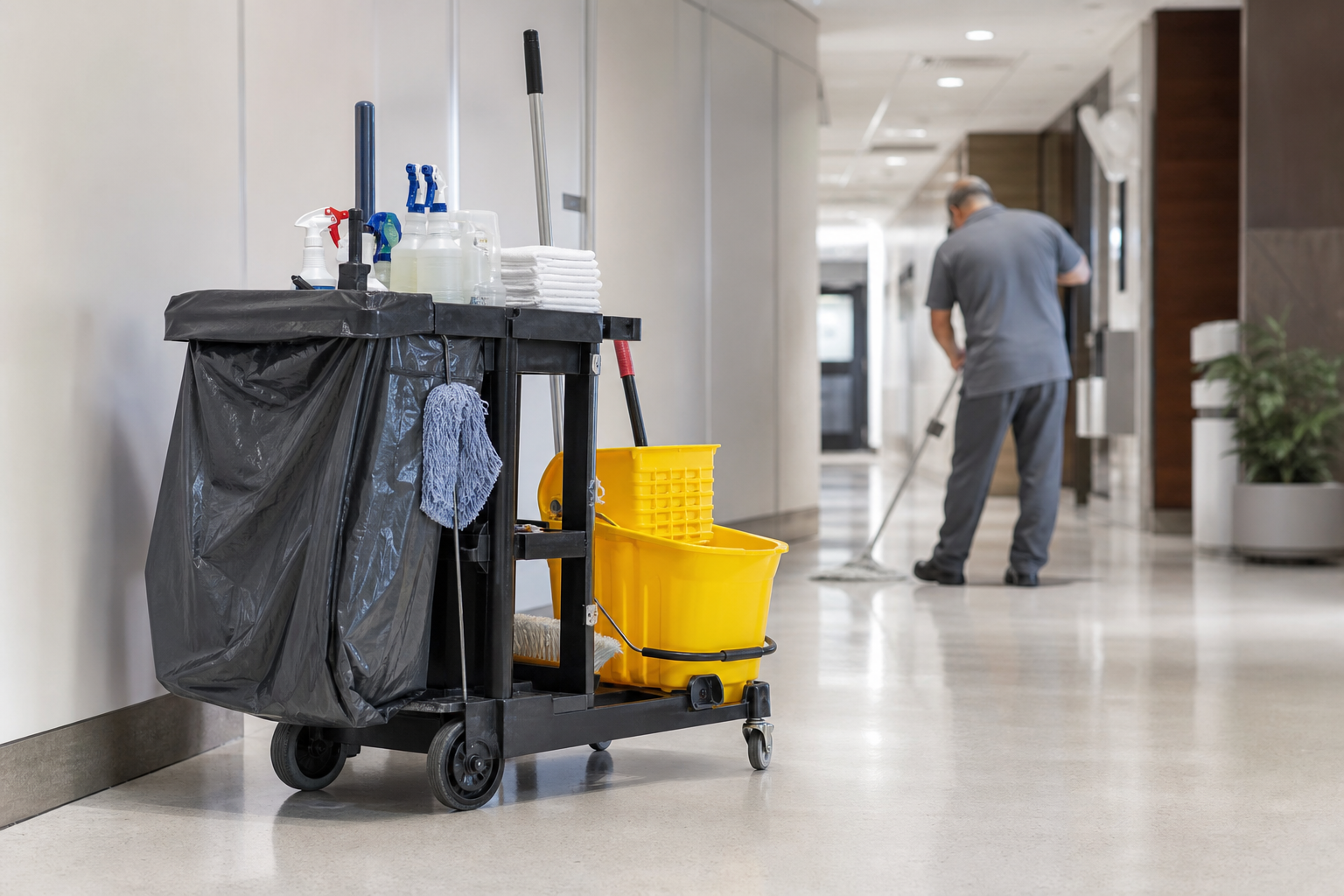
Carts, mops and buckets, vacuums and floor machines, chemicals, can liners, paper products, matting, waste containers and PPE — specified, quoted and delivered on a schedule. Serving Salt Lake City, Utah and the surrounding states.
15
Product categories
4
Program areas covered
15 ft
Recommended entrance matting
(800) 326-4403
Talk to a specialist
Buy the Program, Not the Product List

Almost nobody sets out to buy janitorial supplies. They set out to keep a building presentable, keep staff and visitors safe on the floors, and keep the restrooms from generating complaints — and the purchase order is just what that turns into. So the useful question is not “which mop?” but “what does this building need, how often, and who is going to carry it?”
That is how we quote this category. We look at the square footage and the floor types, the cleaning window, the crew size, how far the supply closet is from the work, and what the site already owns. Then we build a short, standardized list — usually far shorter than the one it replaces — and put it on a delivery schedule so nobody is buying paper towels at retail on a Friday afternoon.
MH-USA has supplied Utah and Mountain West facilities with material handling and facility products for decades, and janitorial sits in the same conversation as the shelving in the supply closet, the carts on the floor and the waste containers on the dock. Everything below is stocked and orderable, and most of it can be reordered directly from our online store.
Janitorial Product Categories
Fifteen categories cover essentially every recurring janitorial purchase a commercial facility makes. Each one links to the live catalog on our online store, where you can see current items and reorder without a phone call.
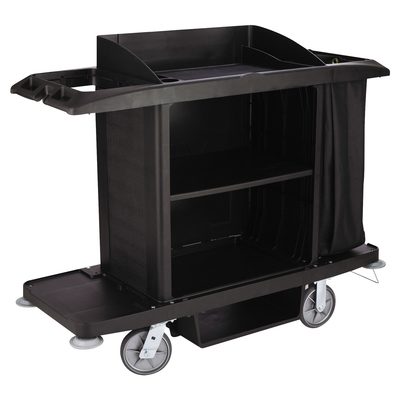 Janitor & Housekeeping CartsVinyl-bag housekeeping carts, high-security carts with an enclosed locking cabinet, service carts and utility carts. A cart is the single biggest productivity item in a janitorial program — it removes the walking that eats a custodian’s shift.
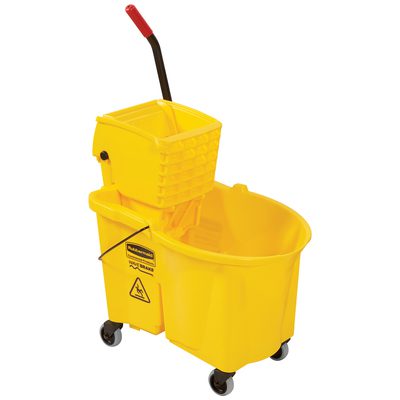 Mops, Buckets & WringersCut-end and looped-end wet mops, microfiber flat mop systems, 60″ dust mop frames and heads, aluminum and fiberglass handles, and 35–44 quart side-press bucket and wringer combos on casters.
 Vacuums & Floor MachinesCommercial uprights with on-board tools for carpet, wet/dry vacuums for spills and shop use, and rotary floor machines, burnishers and auto scrubbers for hard floors. We size the machine to the square footage and the cleaning window.
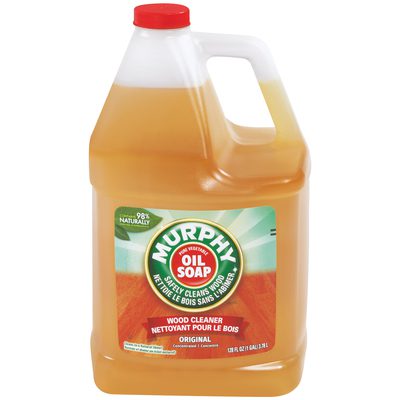 Cleaning Chemicals & DisinfectantsNeutral floor cleaners, degreasers, glass and restroom cleaners, EPA-registered disinfectants, and dilution-control concentrates that cut both cost per ready-to-use gallon and mixing errors.
 Hand Hygiene & DispensersFoam and lotion soaps, heavy-duty and antibacterial skin cleansers, sanitizer, and manual or touch-free dispensers. Standardizing on one dispenser platform keeps refills interchangeable across every building.
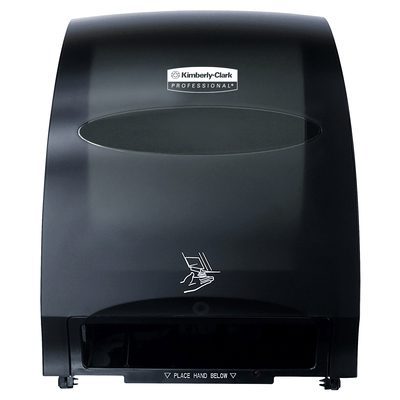 Paper Products & DispensersHard roll and center-pull towels, C-fold and multifold towels, jumbo and standard bath tissue, and matching dispensers in black plastic or brushed steel. Roll towel in a controlled dispenser is almost always the lowest cost per hand dried.
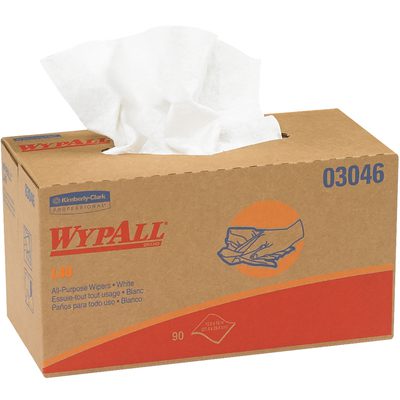 Wipers, Rags & Shop TowelsIndustrial wipers in dispenser boxes and jumbo rolls, low-lint task wipers for labs and electronics, blue shop towels and bulk shop rags — sized so crews stop using paper towel as a wiper.
 Waste & Recycling ContainersRound and square rigid containers from 10 to 55 gallons, slim rectangular containers for tight corridors, dome and flat lids, dollies and trolleys, tilt trucks and multi-stream recycling stations.
 Can Liners & Trash BagsHigh-density and low-density liners matched to container size and load, plus color-coded recycling liners and printed infectious-waste liners. Liner gauge is the most commonly over-specified item in the category.
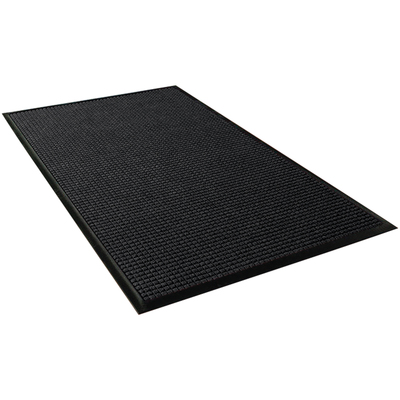 Entrance & Anti-Fatigue MattingRubber scraper mats, water-absorbing entrance mats and runners, vinyl carpet mats, and nitrile or marble anti-fatigue mats for standing workstations. Matting is prevention — it is cheaper than the floor care it eliminates.
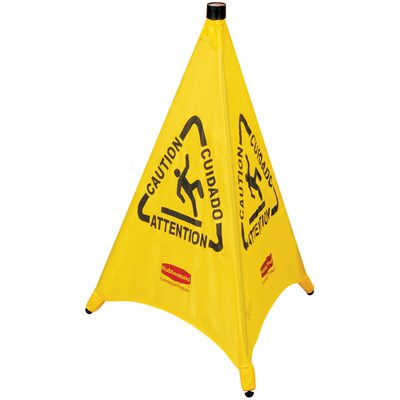 Wet Floor Signs & Facility SignsMultilingual pop-up cones, two-sided folding wet floor signs, ADA restroom signs, and facility identification signs for exits, fire equipment and hand washing.
 Gloves & Personal ProtectionNitrile and latex disposable gloves, chemical-resistant and cut-resistant gloves classified to ANSI/ISEA 105, safety glasses and goggles, N95 and half-face respirators, and first aid supplies.
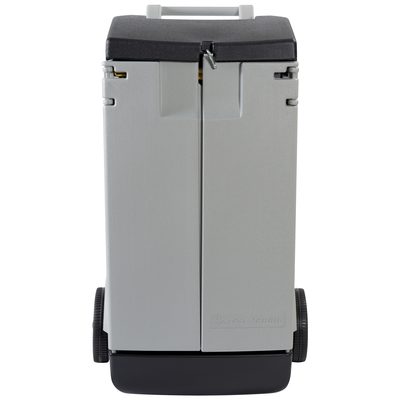 Spill Control & SorbentsUniversal, oil-only and hazmat sorbent pads, rolls, socks, pillows and drum toppers, plus zipper-bag, drum and mobile cart spill kits staged where a spill is actually likely to happen.
 Anti-Slip Tape & TreadsStandard and heavy-duty anti-slip tape in black, clear and black/yellow stripe, stair treads and nosings, and application rollers for stairs, ramps, dock edges and mezzanine landings.
 Breakroom & Hand CarePre-moistened heavy-duty hand towels, dish and hand soaps, cups, cutlery, foil and food-service disposables — the items that get forgotten until the breakroom runs out on a Friday.
Not sure what your building actually needs?
Send us the square footage, floor types and crew size. We will come back with a standardized supply list, the equipment that fits your cleaning window, and pricing at your real annual volume.
Floor Care: Equipment That Matches the Floor
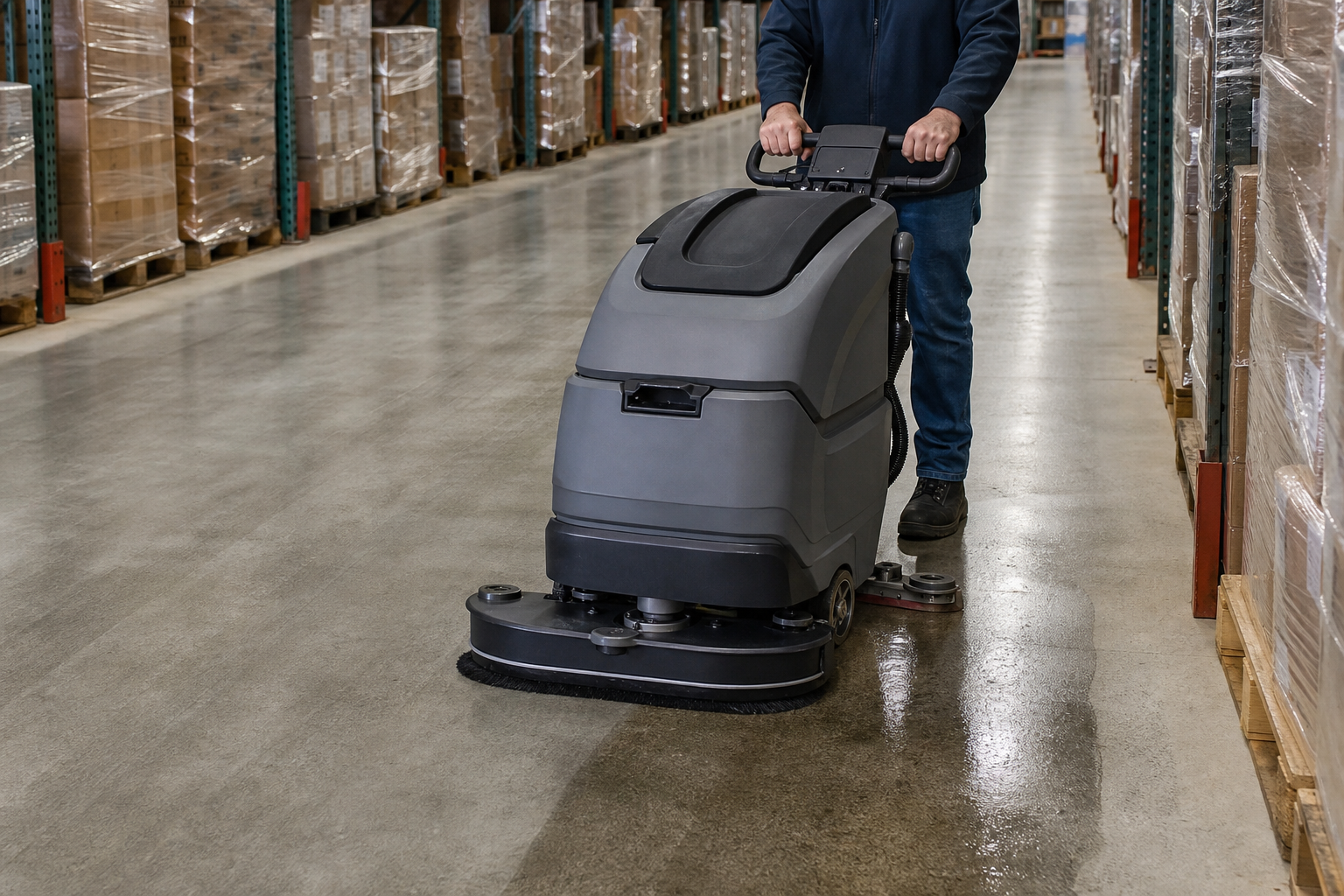
Floor care consumes most of a janitorial budget, and most of the waste in it comes from using the wrong tool at the wrong frequency. Hard floors want a dust mop or sweeper first, then a damp mop or a scrubber with a neutral cleaner. Carpet wants frequent vacuuming with periodic extraction, not the other way around. Concrete in a plant or warehouse wants a scrubber and sweeping compound, not a string mop.
The step change happens when a building moves from mopping to machine scrubbing. A walk-behind scrubber applies solution, agitates and recovers it in one pass, so the floor is cleaner, drier sooner and far more consistent from night to night. OSHA expects workroom floors to be kept dry so far as practicable; a scrubber gets you there in a way a wet mop cannot.
Sizing is arithmetic, not opinion. Take the area, divide by the production rate for the task, multiply by the annual frequency, and you have the labor hours — the ISSA workloading approach. Do that for mopping and again for scrubbing and the machine either pays for itself in labor or it does not.
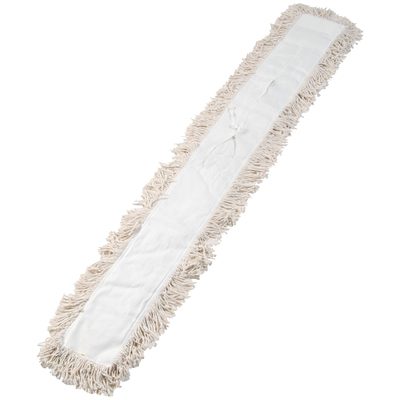 Dust MoppingA 60″ cut-end dust mop and frame clears more floor per pass than any broom and is the first step of every hard-floor routine. Dust mop before you wet mop or you are simply making mud.
 Manual SweepersA single-action push sweeper picks up grit, staples and debris in receiving areas and aisles without raising dust, and it needs no power, no charging and no training.
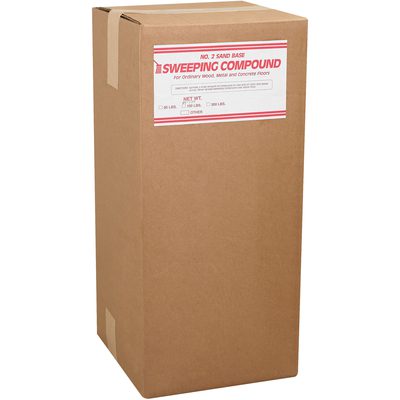 Sweeping CompoundOil-free or gritless compound holds dust down while sweeping bare or sealed concrete. Sold in 100 lb and 200 lb bags and 300 lb drums for shops, plants and dock areas.
 Commercial VacuumsUpright vacuums with on-board tools for carpeted offices and corridors, canisters for stairs and tight spaces, and wet/dry units for spills, shop debris and flood response.
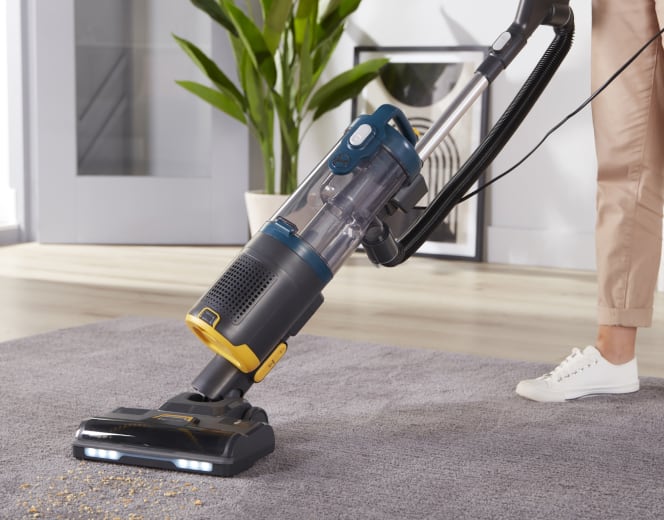 Carpet CareVacuuming is the whole program; extraction is the reset. Interim encapsulation between deep extractions keeps traffic lanes presentable without taking carpet out of service for a day.
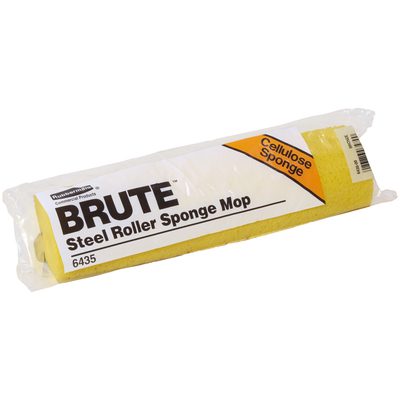 Wet Mopping & WringersSponge, cut-end and looped-end mop heads are consumables — replace them on a schedule, not when they fall apart. Side-press wringers reduce splash and hand contact and leave the floor drier, which shortens the wet window and the slip exposure that goes with it. Two-compartment buckets keep rinse water out of solution.
Dust first, then wet
Every hard-floor routine starts dry. Dust mopping or sweeping before mopping removes the grit that otherwise turns into slurry, scratches finish and doubles your mop changes. Crews that skip it spend the difference on floor refinishing.
Waste, Recycling & Can Liners
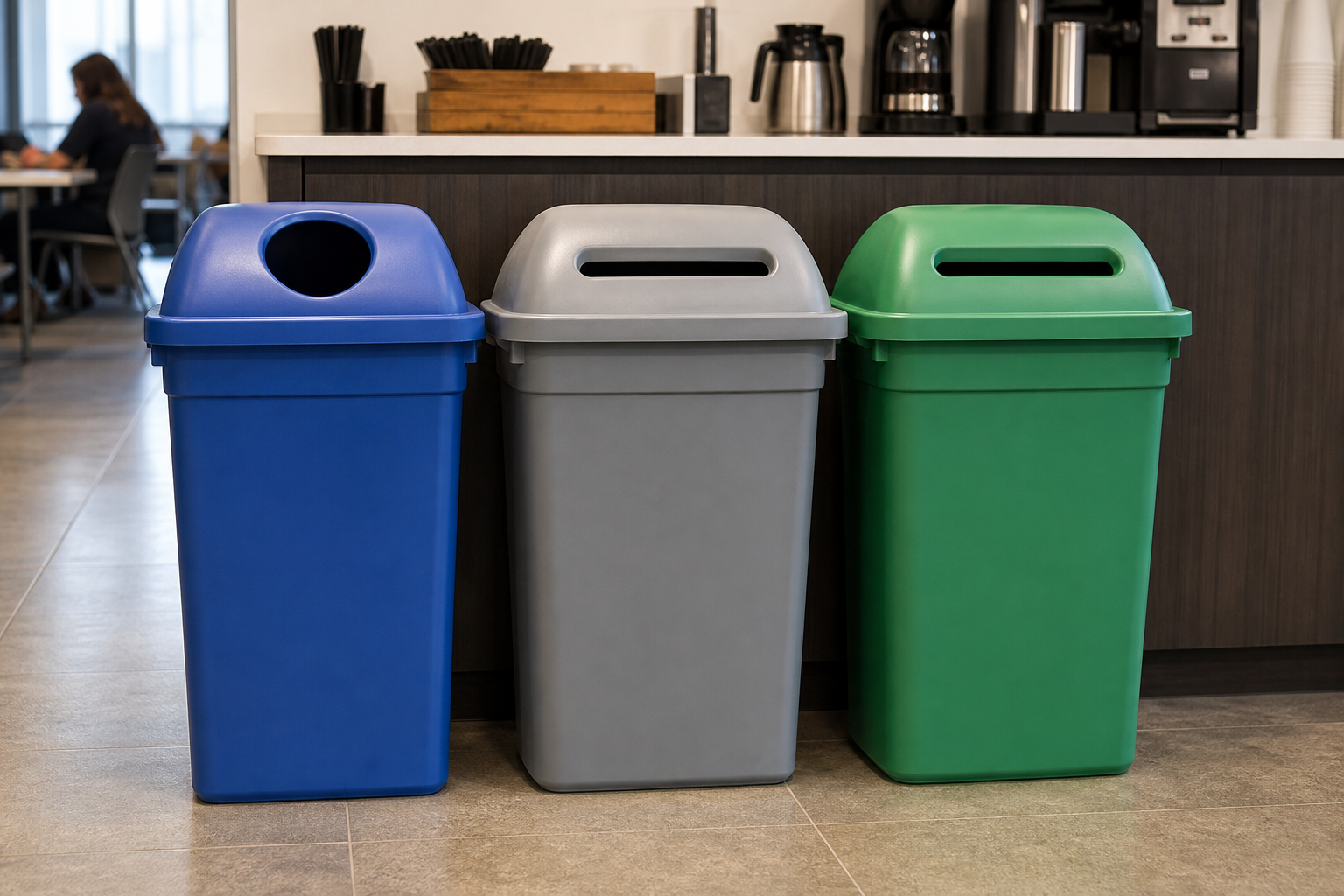
Waste handling is where facilities most often pay twice: once for containers that do not match the collection route, and again for liners a gauge or two heavier than the load requires. Getting the container, the lid, the dolly and the liner to agree is a short exercise with a long payback.
OSHA sets the baseline. Under 29 CFR 1910.141(a)(4), a receptacle used for putrescible solid or liquid waste must be built so it does not leak, must be thoroughly cleanable, and must have a solid tight-fitting cover unless it can be kept sanitary without one — and waste has to be removed often enough to keep the workplace sanitary. That is why kitchen and food-area containers get lids and get washed, while an office side can does not need either.
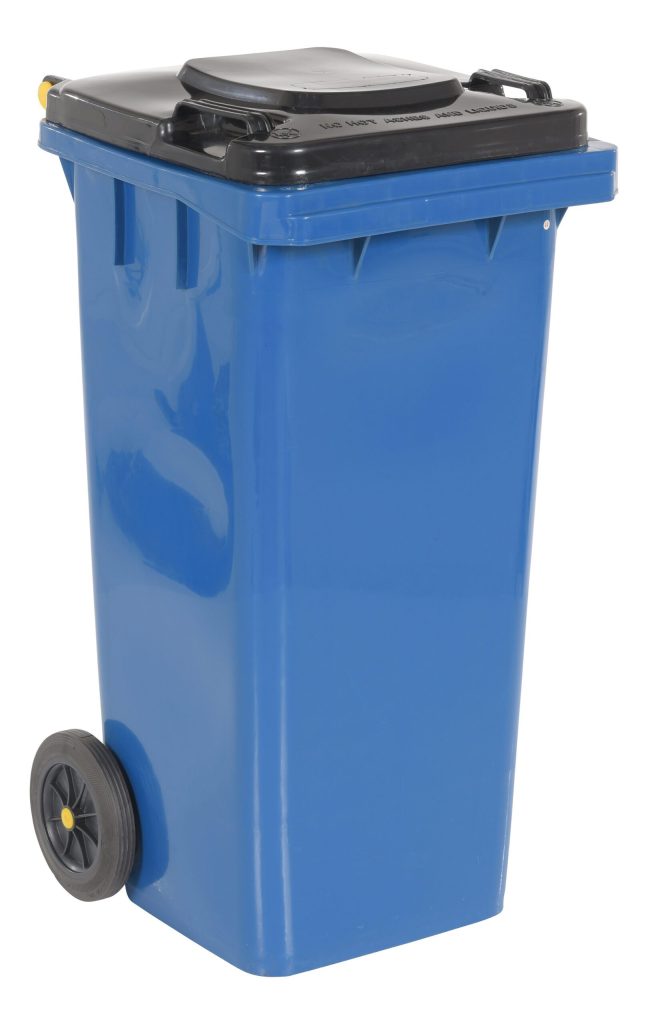 Poly & Rigid Containers32 and 40 gallon round and square containers in color-coded poly for waste and recycling, with lid-lift options and matching dollies so a full container is rolled, not dragged.
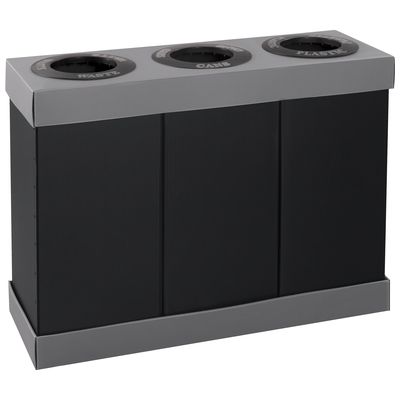 Multi-Stream Recycling StationsTwo- and three-bin corrugated plastic stations for breakrooms, copy rooms and event spaces. Color and labeling do more for stream purity than any memo.
 Slim Containers & TrolleysNarrow rectangular containers fit corridors, aisle ends and behind-counter spaces, and a trainable trolley lets one person move several containers per trip on a collection route.
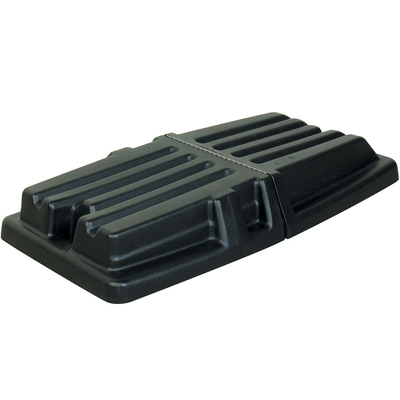 Tilt Trucks & Bulk HandlingHalf cubic yard and larger tilt trucks with domed or flat lids move bulk trash, laundry and scrap to the compactor without repeated bag handling.
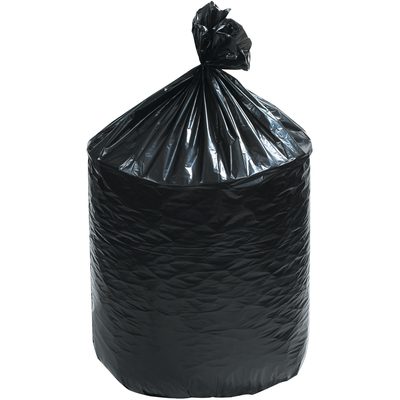 High-Density LinersHigh-density liners resist puncture from paper and light dry waste at a lower gauge and lower cost. Match the flat width to the container circumference or you pay for film you tuck away.
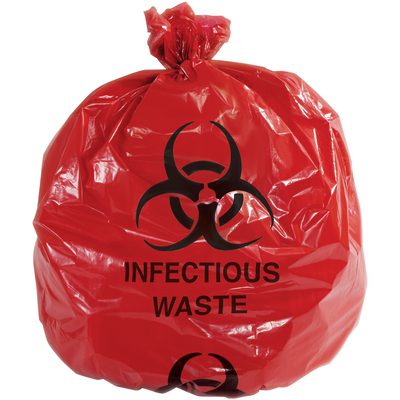 Specialty & Regulated LinersPrinted infectious-waste liners, color-coded recycling liners and heavy low-density liners for wet, sharp or heavy loads in kitchens, clinics and production areas.
Can Liner Sizing Guide
Match flat width to roughly half the container circumference, and length to the container height plus 3–4 inches of overhang. Use these as starting points, then confirm against the containers you actually own.
| Container size | Typical liner size | Typical resin & gauge | Best for |
|---|---|---|---|
| 10–16 gal (office side can) | 24″ × 33″ | High density 0.5–0.6 mil | Paper, light dry waste |
| 20–30 gal (corridor, restroom) | 30″ × 37″ | High density 0.6–0.9 mil | Mixed dry waste, restroom waste |
| 32–33 gal (round rigid) | 33″ × 40″ | High density 0.7–1.0 mil | General facility waste, recycling |
| 40–45 gal (square / brute) | 40″ × 46″ | High density 0.7–1.1 mil or low density 1.2–1.5 mil | Breakroom, kitchen, wet waste |
| 55–60 gal (drum, tilt truck) | 38″ × 58″ | Low density 1.5–2.0 mil | Heavy, sharp or wet loads |
Cut your liner SKUs in half
Most sites carry five or six liner items where three would cover every container. Tell us what containers you have and we will spec the shortest list that fits them and quote it by the case or the pallet.
Restroom, Hand Hygiene & Paper Products
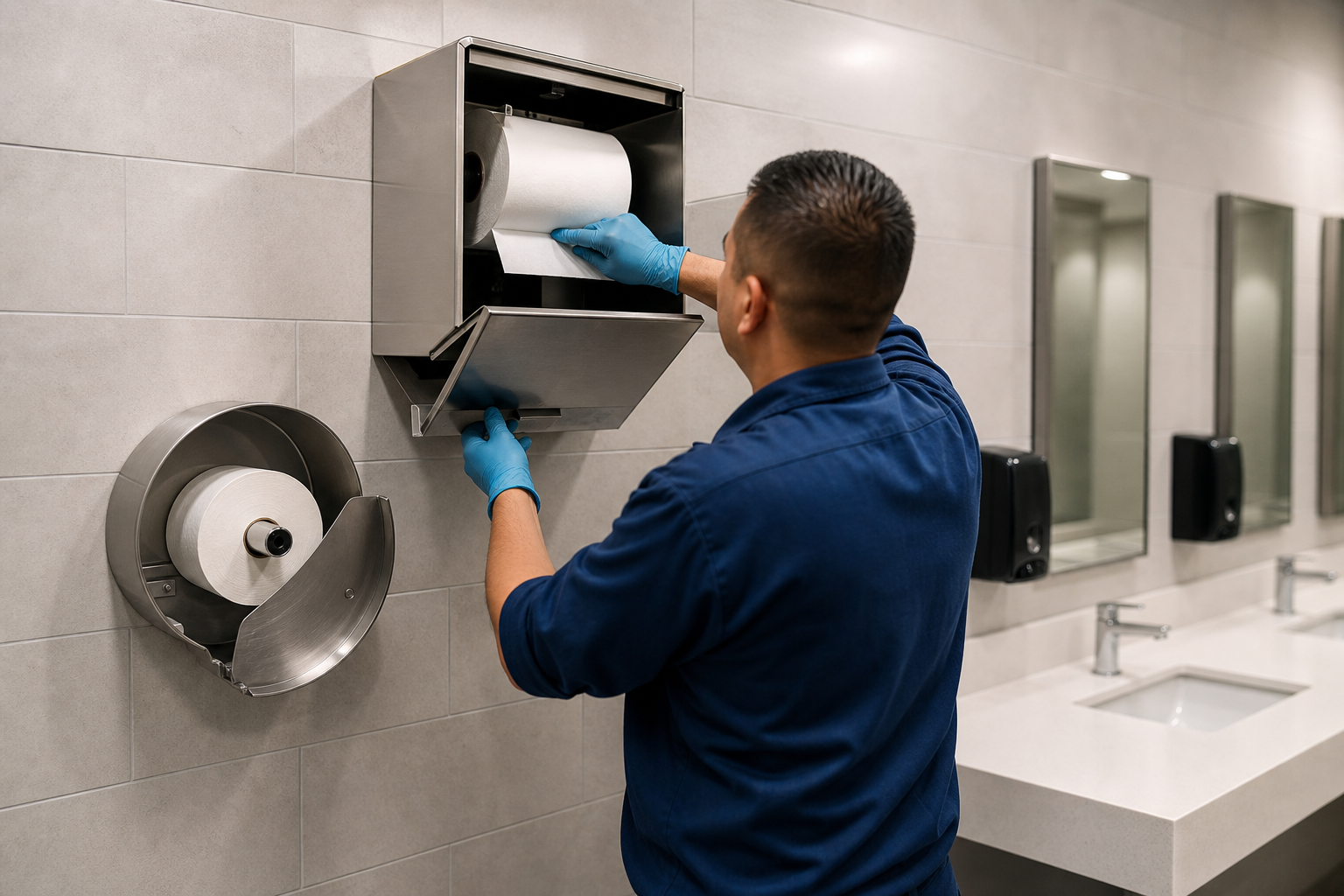
Restrooms generate more complaints per square foot than any other space in a commercial building, and nearly all of them trace to two things: a dispenser that ran out, or a surface that was wiped instead of cleaned. Both are supply and dispenser decisions before they are labor decisions.
Standardize the dispenser platform first. When every building uses the same roll towel, tissue and soap dispensers, refills are interchangeable, stock-outs get covered from the next closet over, and you stop carrying four versions of the same consumable. High-capacity jumbo tissue and hard roll towel also cut the number of service visits, which is usually the largest single saving available in the category.
On disinfection, follow the label. CDC guidance is to clean regularly and disinfect high-touch surfaces when illness risk is elevated; the EPA-registered product only performs if the surface is cleaned first and stays visibly wet for the contact time on the label. Build that dwell time into the routine or you are buying disinfectant and getting a cleaning.
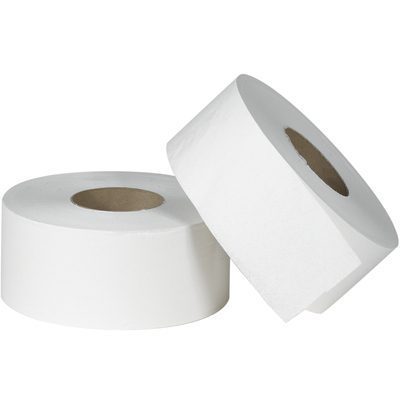 Bath TissueJumbo roll, standard roll and coreless systems. Jumbo dispensers cut both restocking labor and the “we ran out” complaint that generates most restroom service calls.
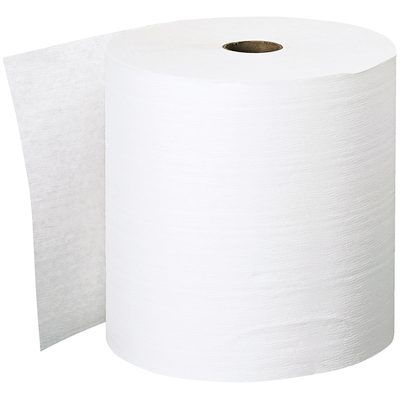 Roll & Folded TowelsHard roll and center-pull towels for controlled dispensing; C-fold, multifold and BigFold Z where a folded towel is expected. Controlled dispensing is where the savings live.
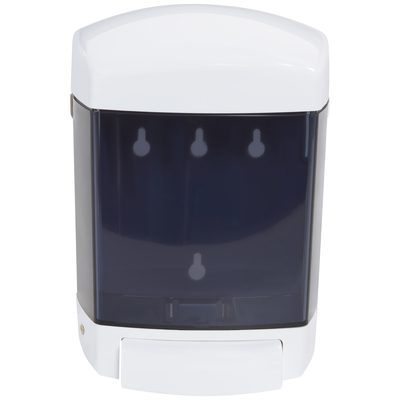 Soap & DispensersFoam, lotion and antibacterial soaps in sealed refill cartridges, with manual or touch-free dispensers. Sealed refills avoid the contamination risk of topping off open reservoirs.
 Restroom & Facility SignsADA-compliant restroom signage, hand-washing reminders, and facility signs for exits, fire equipment and no-admittance areas.
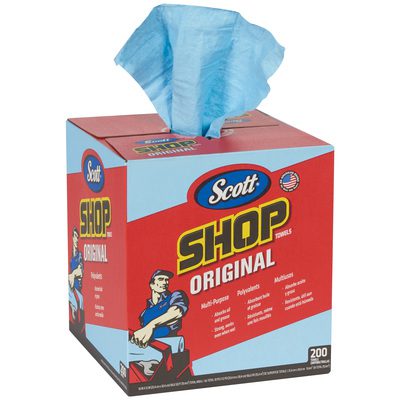 Wipers for High-Touch SurfacesA wiper in a dispenser box gives crews a consistent, disposable surface for disinfecting door hardware, rails, switches and counters instead of a shared rag.
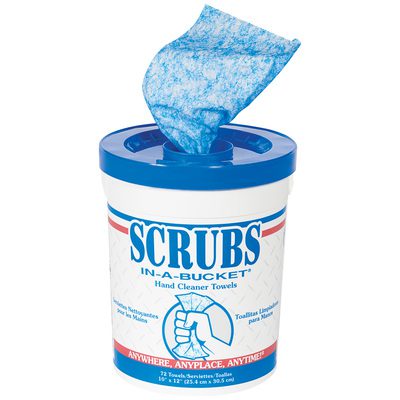 Heavy-Duty Hand CleaningPre-moistened towels in a bucket handle grease, adhesive and ink at the point of work, where there is no sink and no time to walk to one.
Matting, Wet Floor Safety & Spill Control

The cheapest floor you clean is the floor that never got dirty. A three-zone entrance matting system — scraper outside, scraper/wiper in the vestibule, absorbent wiper inside, roughly 15 feet of walkable matting in total — is credited by matting manufacturers with stopping the large majority of tracked-in soil and moisture at the door. Everything it catches is soil you never scrub, extract or refinish, and water you never mop off a lobby floor.
The same logic runs through the rest of this section. Anti-fatigue matting at standing workstations, anti-slip tape on stair treads and dock edges, cones out the moment a floor is wet, and spill kits staged where a spill is actually likely — each one removes an incident before it needs a response. For chemical and oil spills, sorbent socks contain first and pads or rolls recover second.
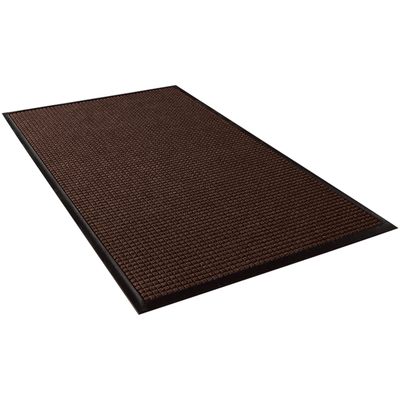 Three-Zone Entrance MattingA scraper mat outside, a scraper/wiper mat in the vestibule and a wiper runner inside. Industry practice is roughly 15 feet of combined matting to capture the large majority of tracked-in soil before it reaches finished flooring.
 Anti-Fatigue MattingNitrile, marble-pattern and bordered economy mats for packing benches, assembly cells and service counters where staff stand a full shift on concrete.
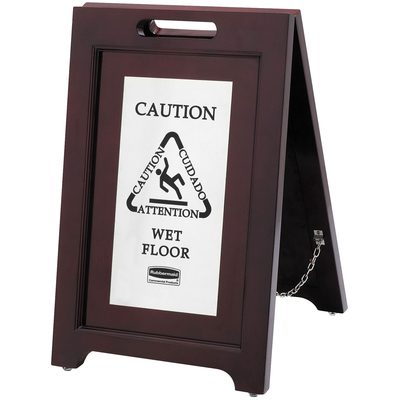 Wet Floor WarningPop-up cones and folding two-sided signs in multiple languages. OSHA requires workroom floors to be kept dry so far as practicable — when they cannot be, the warning is what is left.
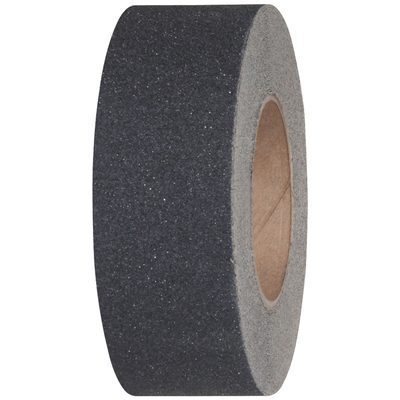 Anti-Slip Tape & TreadsBlack, clear and striped anti-slip tape for stair treads, ramps, dock edges and mezzanine landings, with heavy-duty grades for exterior and high-traffic use.
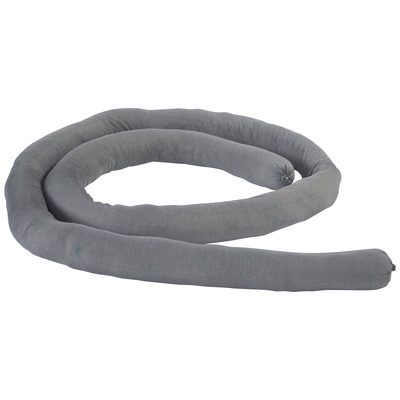 SorbentsUniversal, oil-only and hazmat pads, rolls, socks, pillows and drum toppers. Socks contain the spill first; pads and rolls recover it.
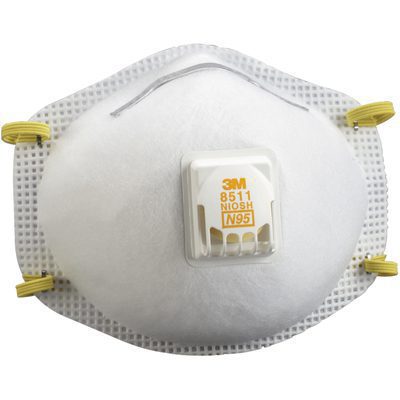 PPE for Cleaning TasksNitrile and chemical-resistant gloves, splash goggles, and N95 or half-face respirators for dusty sweeping, chemical decanting and restoration work.
- Matting at every public and employee entrance, not just the main lobby
- Anti-slip treads on stairs, ramps, dock edges and mezzanine landings
- Wet floor cones stored on the cart, not in the closet
- Spill kits staged at the point of risk — chemical storage, dock, kitchen, aisle intersections
- Gloves, eye protection and respirators matched to the chemical and the task
- Mats lifted, cleaned and dried on a schedule so they keep working
Cleaning Chemicals: Fewer Products, Used Correctly
Most facilities carry two or three times the chemicals they need, and dilute half of them by eye. A short chemical list on a dilution-control system is cheaper per ready-to-use gallon, easier to train, and far easier to keep compliant.
| Product type | Where it belongs | What to watch |
|---|---|---|
| Neutral floor cleaner | Daily damp mopping of sealed and finished hard floors | pH-neutral so it does not strip finish; dilute per label — over-concentration is what leaves film |
| Degreaser | Kitchens, shops, production floors, dock aprons | Alkaline; test on painted and aluminum surfaces first and rinse |
| Glass & multi-surface cleaner | Windows, mirrors, stainless, plastic laminate | Apply to the cloth, not the glass, to avoid runs into frames and hardware |
| Restroom cleaner / acid bowl cleaner | Fixtures, urinals, hard-water scale | Never mix with bleach or ammonia products; gloves and eye protection required |
| EPA-registered disinfectant | High-touch surfaces, restrooms, patient and food-contact areas | Clean first, then disinfect; the surface must stay visibly wet for the label contact time |
| Dilution-control concentrate | Any site with more than a few gallons a week of ready-to-use product | Lowest cost per RTU gallon and the fastest way to remove mixing errors |
Secondary containers must be labeled
OSHA’s Hazard Communication Standard, 29 CFR 1910.1200(f)(6), requires every workplace container of a hazardous chemical to be labeled, tagged or marked with the product identifier and hazard information — that includes the spray bottles your crew fills from a concentrate. Keep the safety data sheets accessible and train on the products in use. The only exception is a container an employee fills and uses entirely within their own shift.
- Standardize on one dilution-control platform so nobody mixes by eye
- Never combine acid bowl cleaner with bleach or ammonia products
- Clean before you disinfect — soil deactivates most antimicrobials
- Keep the surface visibly wet for the full label contact time, reapplying if needed
- Store chemicals below eye level, on a shelf with containment, away from food and paper goods
- Match gloves and eye protection to the most aggressive product on the cart
Choosing by Facility Type
Use this as a starting specification, then adjust for your floor mix, cleaning window and crew. The differences between these rows are mostly about scale and the consequences of a miss — a stock-out in an office is an annoyance; in a clinic or a food plant it is a compliance problem.
| Facility type | Core equipment | Consumables | Safety items | Program notes |
|---|---|---|---|---|
| Small office / clinic (under 15,000 sq ft) | Housekeeping cart, 35 qt bucket & wringer, upright vacuum, dust mop | Roll towel, jumbo tissue, foam soap | 3 zones of entrance matting, wet floor signs | Weekly delivery of consumables, quarterly equipment check |
| School / campus building | Multiple carts, auto scrubber, wide-area vacuum, tilt truck | High-capacity roll towel and tissue, sanitizer | Matting at every entrance, anti-slip stair treads | Summer stock-up, standardized dispensers across buildings |
| Warehouse / distribution center | Auto scrubber or rider, manual sweepers, sweeping compound, wet/dry vacuum | Shop towels, industrial wipers, heavy-duty hand cleaner | Anti-slip dock edging, aisle spill kits, anti-fatigue mats at pack stations | Pallet quantities of liners and wipers, scheduled releases |
| Manufacturing plant | Sweepers, scrubbers, tilt trucks, drum-mounted waste tops | Degreasers, low-lint wipers, hand cleaner | Sorbent socks and pads, hazmat kits, PPE program | SDS on file for every chemical, secondary container labeling |
| Retail / grocery | Slim containers on trolleys, auto scrubber, upright vacuums | Center-pull towels, tissue, sanitizer | Entrance matting, pop-up cones at every spill | Recycling stream separation for cardboard and film |
| Healthcare / lab support | Enclosed high-security cart, microfiber flat mop system, HEPA vacuum | EPA-registered disinfectants, low-lint wipers, gloves | Infectious-waste liners, dedicated color-coded microfiber | Documented dwell times, per-room disinfection routine |
Have more than one building?
Multi-site programs are where standardization pays. We will build one approved catalog across your sites, quote it at combined volume and set release schedules per location.
Request a Quote Warehouse & Facility Layout Help Call (800) 326-4403
How We Set Up a Janitorial Supply Program
Walk the building
Square footage by floor type, restroom fixture counts, entrances, container locations, closet space and the distance from the closet to the work.
Standardize the list
One dispenser platform, two or three liner sizes, a short chemical list on dilution control, and the equipment that fits your cleaning window. Shorter lists cost less and train faster.
Quote at real volume
We price the annual quantity, not the one-off case, and show you where a case or pallet break changes the number.
Set the release schedule
Consumables arrive before anyone runs out. Site managers can also reorder the approved items directly from MaterialHandling-USA.com.
Review and adjust
After a full cycle we look at what actually moved, drop the dead SKUs and re-quote what grew.
Shop Online at MaterialHandling-USA.com
Every category on this page is orderable from our online store — browse current items, or send us a list and we will quote it at volume:
Related Products & Resources
 Waste ReceptaclesContainer styles, lids, liners and placement for offices, plants and public spaces — the deeper guide behind the waste section above.
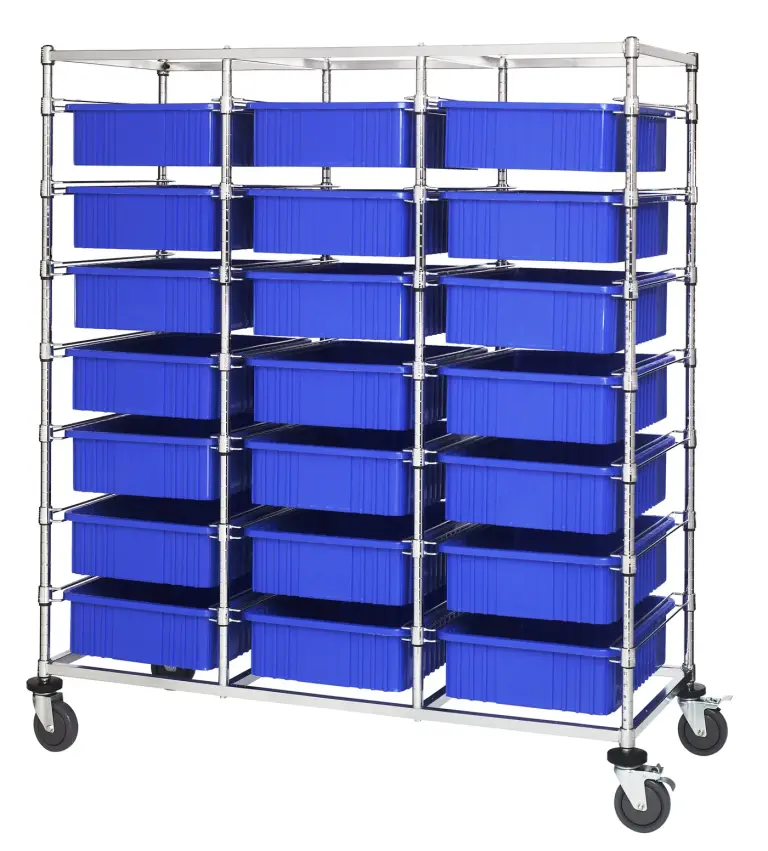 Utility & Service CartsShelf carts, bin carts and platform trucks for moving supplies, tools and stock through a building without a second trip.
 Stock Room & Closet ShelvingShelve the supply closet properly and the standardized list stays standardized. Steel, wire and boltless options sized to the room.
 Wholesale Shipping SuppliesThe other recurring consumable order — boxes, tape, stretch wrap and void fill, quoted and scheduled the same way.
 Warehouse Design & LayoutWhere the closets, waste stations and matting go is a layout decision. We draw it before you buy the equipment.
 Material Handling ProductsCarts, shelving, dock equipment, lockers and storage across every department we supply in Utah and the Mountain West.
Janitorial Equipment & Supplies FAQs
What is included in janitorial equipment and supplies?
Should I buy an auto scrubber or keep wet mopping?
How much entrance matting does a building actually need?
What does OSHA require for housekeeping and waste containers?
Do I need to label spray bottles we fill from a concentrate?
What is the difference between cleaning, sanitizing and disinfecting?
How do I choose the right can liner?
Can you set up recurring deliveries and a standard order list?
Get a Janitorial Supply Quote
Tell us about the building and we will build the list, quote it at your real volume and put it on a delivery schedule. Call (800) 326-4403 or request a quote online.