
Cantilever Pallet Rack for Lumber at a Junior High School
How a Weber County, Utah junior high got its lumber off the floor and onto a wall-line cantilever rack — and how to specify the same safe, organized storage for your school’s woodshop, scene shop or maintenance room.
100%
Open-front access — no columns in front of the load
24″–48″
Arm lengths on this class of cantilever rack
1,800 lbs
Published capacity of a 24″ regular-duty arm
1½″–3″
Arm height adjustment increments
Lumber Storage That Belongs in a School
Junior high and high schools run on lumber: woodshop projects, theater sets, CTE construction classes, and a maintenance department that fixes everything from door frames to bleachers. What most schools do not have is anywhere to put it. Boards lean in corners, plywood slides behind doors, and the good hardwood warps at the bottom of a pile.
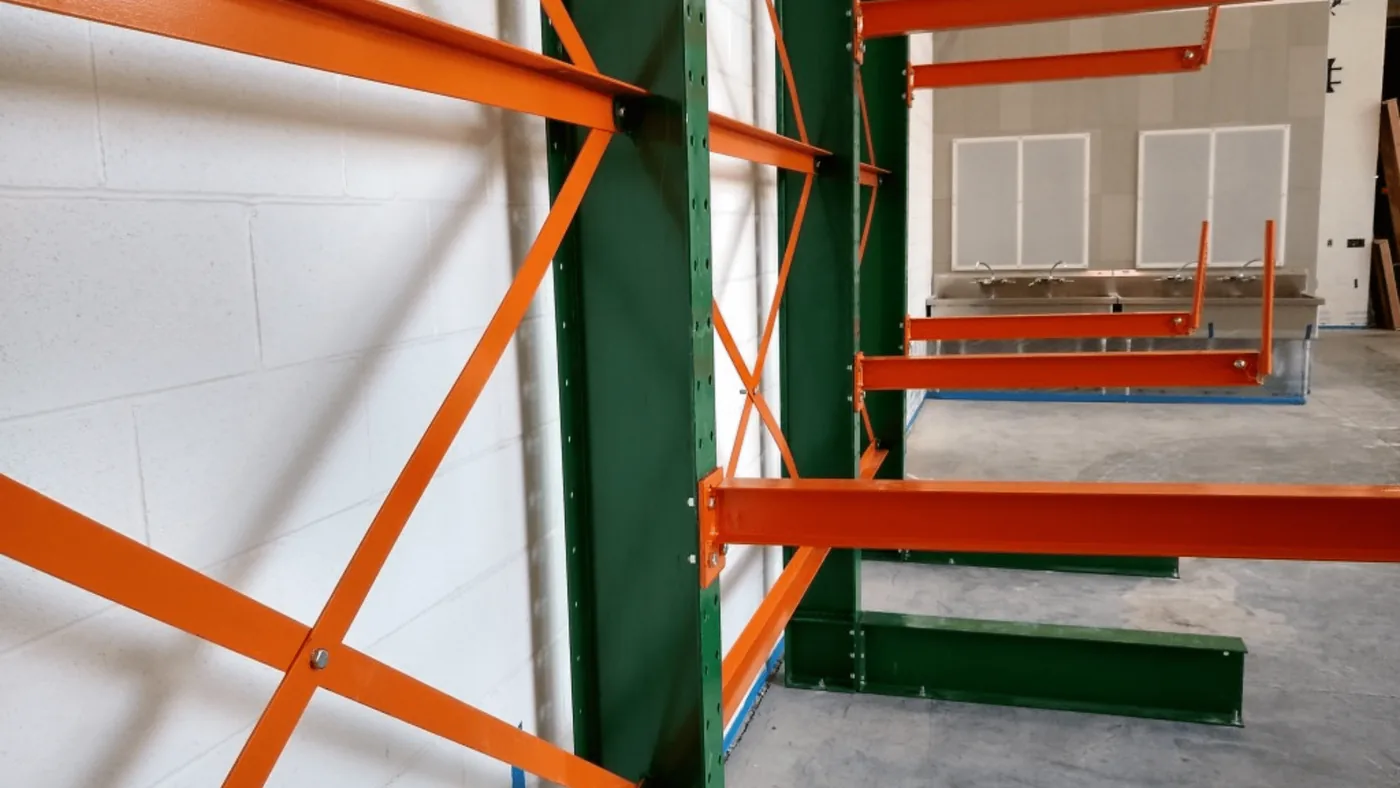
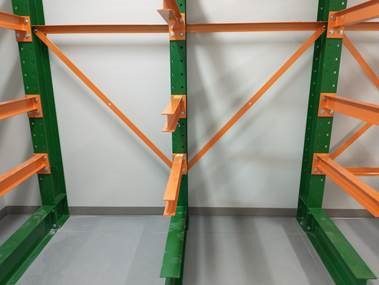
This page is about the fix: a single-sided cantilever pallet rack installed against the wall of a school storage room. The photographs are from a real Material Handling USA project at Roy Junior High School in Weber County, Utah — and the same design thinking applies to any school storage room, shop or district warehouse.
Cantilever rack is the professional standard for long, bulky material because there are no columns in front of the load. Every length of lumber sits on open arms, visible and accessible, on a structure that is anchored, braced and rated for the weight.
Planning storage for a school or district?
Tell us what you store and where it has to fit — we design, quote and install cantilever rack sized to school inventories and school budgets.
Request a Quote Open the Cantilever Rack Designer Call (800) 326-4403
The Challenge: Lumber Piles in a Building Full of Students
In most schools, lumber storage is improvised — a consequence of tight space and tighter budgets, not neglect. The results are predictable, and every one of them was present before this project:
- Trip hazards. Boards stacked on the floor or leaned against walls create obstacles in exactly the rooms where students and staff move with tools and materials.
- Damaged material. Wood stored in piles warps, cracks and picks up moisture — wasted budget every time the bottom of the stack gets culled.
- Lost time. Teachers, students and maintenance staff dig through piles to find the right species, size and length.
- Lost floor space. A floor stack consumes area that should hold workbenches, tools or equipment; a wall-line rack gives that footprint back.
- Invisible inventory. When no one can see what the school owns, material gets re-purchased and offcuts never get used.
None of this is fixed by stacking more carefully. It is fixed by putting the material on a structure designed for it — which is exactly what a cantilever rack is.
What Is a Cantilever Rack — and Why Is It Ideal for Lumber?
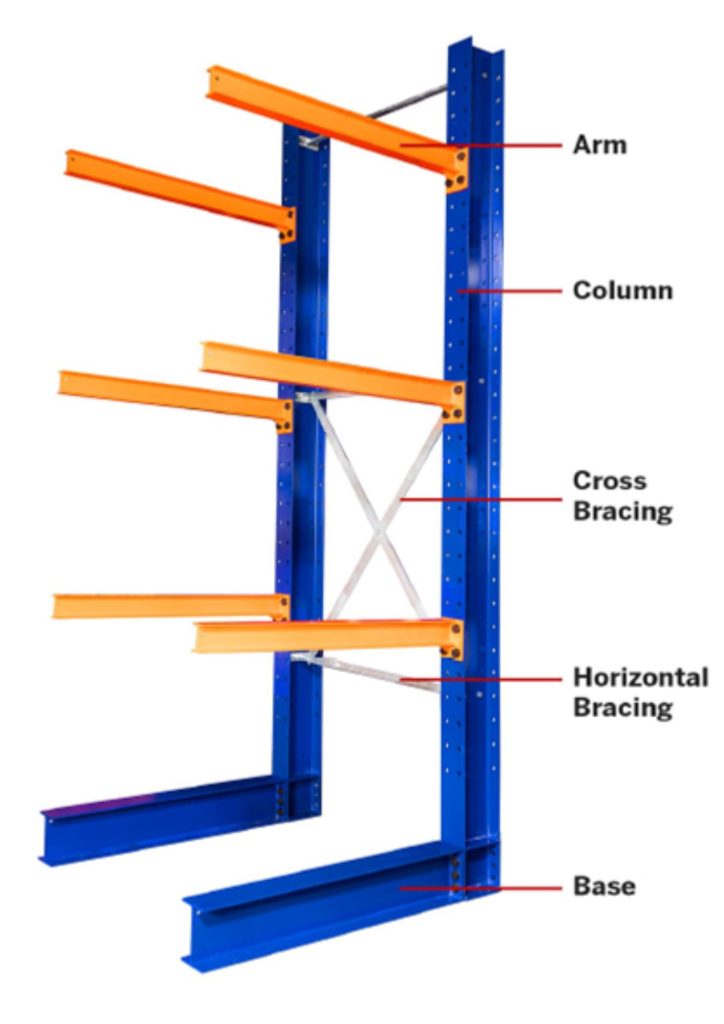
A cantilever rack stores material on horizontal arms that project from vertical steel columns. Standard pallet rack puts uprights at the front of every bay; cantilever rack has nothing in front of the load at all. A 16-foot board loads from the front in one motion, without threading it between posts or moving other material out of the way.
Arms bolt into the column face and reposition as inventory changes — every 3″ on the heavy-duty series and every 1½″ on medium duty — so the rack a school buys for this year’s program still fits next year’s. Inclined arm options tilt the load a few degrees back toward the column so round or loose stock cannot roll off.
The anatomy, part by part
| Component | What it is | What it does |
|---|---|---|
| Base | Heavy steel base bolted to the column and anchored to the concrete floor | Resists the tipping force created by loaded arms; single-sided bases extend behind the wall side |
| Column | Vertical steel tower, 8′, 10′ or 12′ standard heights | Carries the arms; published column capacities up to 11,200 lbs single-sided and 22,400 lbs double-sided |
| Arms | Horizontal load arms, 24″, 36″ or 48″ long (12″–24″ on medium duty) | Hold the lumber; repositionable in 3″ increments (1½″ on medium duty) as inventory changes |
| Bracing | Diagonal and horizontal brace sets in 3′, 4′, 6′ and 8′ widths | Ties columns together into a rigid, stable row |
| End stops | Optional bolt-on stops for heavy-duty arms; welded stops on medium duty | Keep round or loose stock from sliding off the arm ends |
Where the numbers come from
Every capacity on this page is from the manufacturer’s published cantilever rack tables (regular-duty, heavy-duty and medium-duty series, 14-gauge steel construction). Your system’s rated capacity depends on the exact arms, columns and spacing specified for your project — we confirm it on the quote and post it on the rack.
The Project: Roy Junior High School, Weber County, Utah
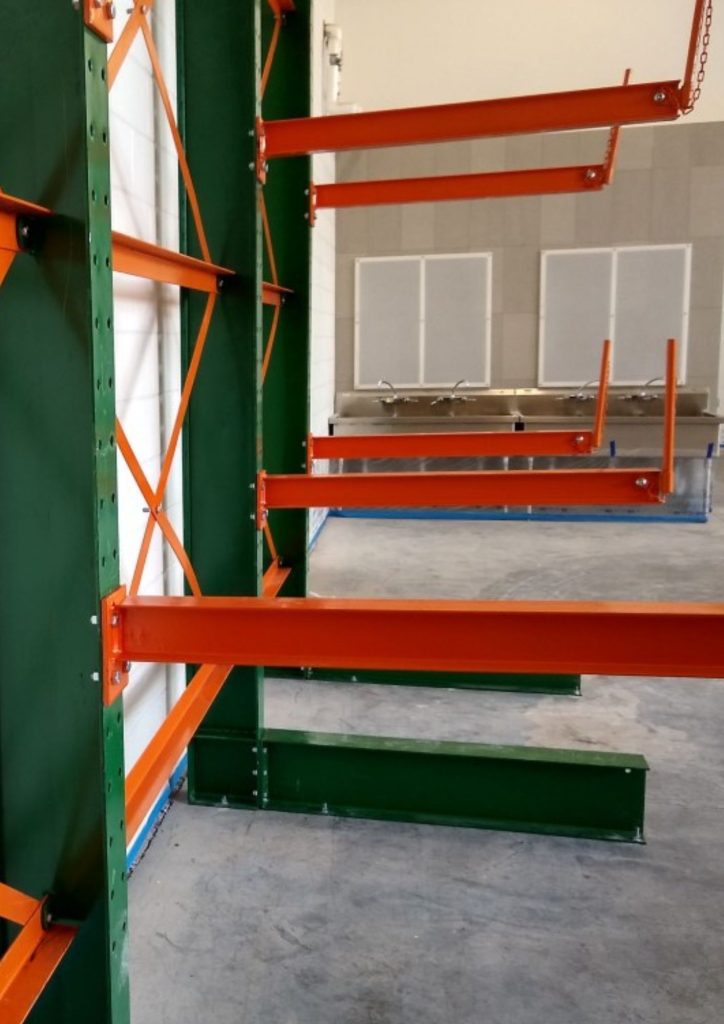
Roy Junior High School (Weber School District) needed a better way to manage lumber for its programs. The previous method was the familiar one: a floor pile that was slow to dig through, hard on the material, and a genuine safety concern in a room used by both staff and students.
Material Handling USA designed and installed a medium-duty, single-sided cantilever rack along the wall of the school’s storage area. Arm lengths and capacities were specified against the school’s actual lumber list — not a catalog default — and the columns were braced together and anchored to the slab.
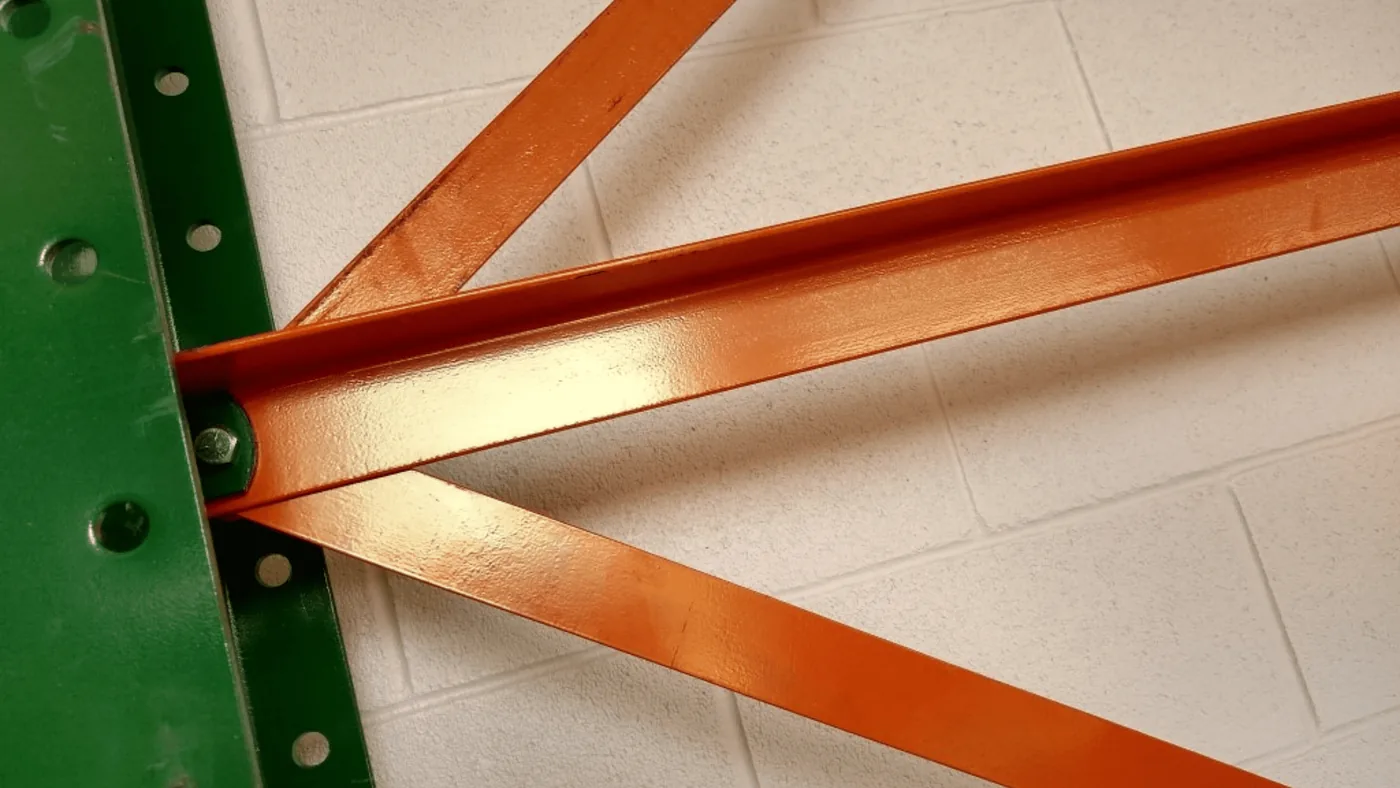
The photographs on this page show the finished installation: green columns, orange arms, bolted bracing, and a clean run of open storage levels along a wall that used to be a pile.
| Project element | Detail |
|---|---|
| Location | Roy Junior High School — Roy, Utah (Weber School District, Weber County) |
| Problem | Lumber for school programs stored in floor piles: hard to access, wasting time, damaging boards, and a hazard in a space used by staff and students |
| System | Medium-duty, single-sided cantilever rack installed against the storage-room wall |
| Configuration | Arm lengths and capacities specified to the school’s typical lumber inventory, with bolted bracing and floor-anchored bases |
| Result | Lumber off the floor, sorted by size and fully accessible from the open front; the storage area went from a pile to a showroom-clean wall of organized stock |

Why single-sided, wall-line rack was the right call
Inside a school building, floor area is the scarcest resource. A single-sided rack stands flat against the wall, so the room keeps its working floor while the wall does the storing. The base extends toward the wall side, the columns anchor to the concrete, and the open face points at the room — full-length access without a single post in the way.
Because the arms adjust, the school can re-space levels whenever programs change: more sheet goods one semester, more dimensional lumber the next. That flexibility is what makes a rack a one-time purchase instead of a recurring problem.
Have a storage room like this one?
Send us a photo and the room dimensions. We will come back with a layout, a capacity plan and a quote your district office can act on.
Safety First: What the Rack Changes in a School Environment
When students are present, safety is the specification. Here is what an engineered cantilever system changes compared with the pile it replaces:
Good habits to pair with the rack
Post the capacity chart, keep heavier stock on the lower arms, and add rack inspection to the same routine as shop equipment checks. The structural rules in our pallet rack safety guidelines apply to cantilever systems too.
Where Schools Put Cantilever Rack to Work
The woodshop is the obvious home, but it is rarely the only department that benefits. These are the places we see school and district lumber actually live:
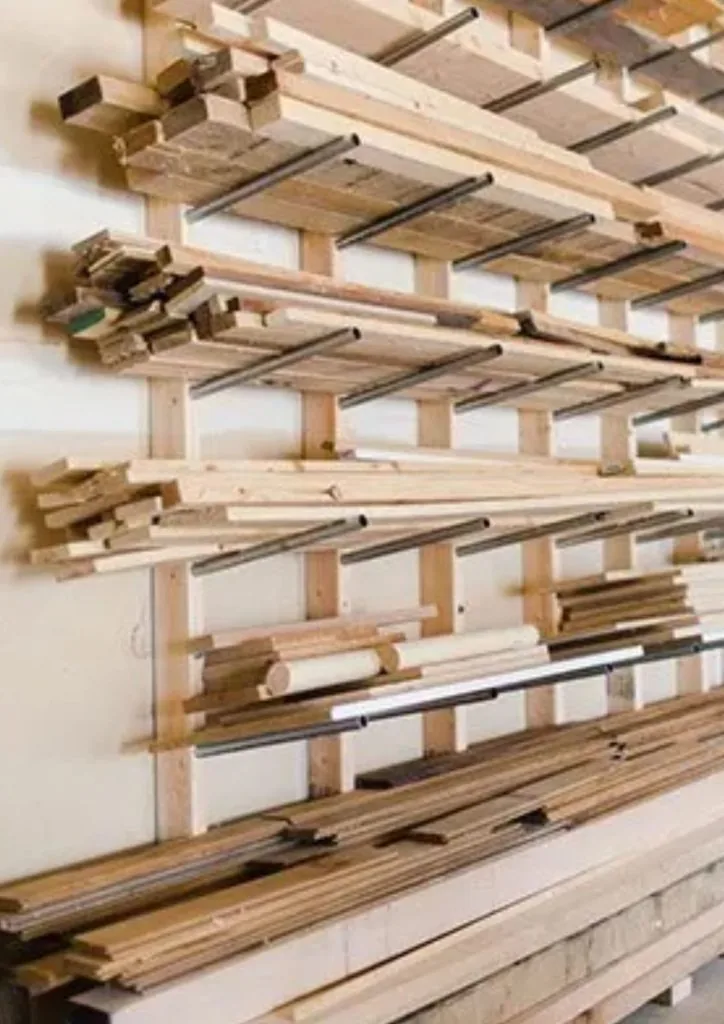 Woodshop & Industrial ArtsThe classic application. Hardwoods, common pine, trim and sheet goods sorted by species and length, so class time is spent building instead of digging through a pile — and expensive boards stop getting damaged at the bottom of a stack.
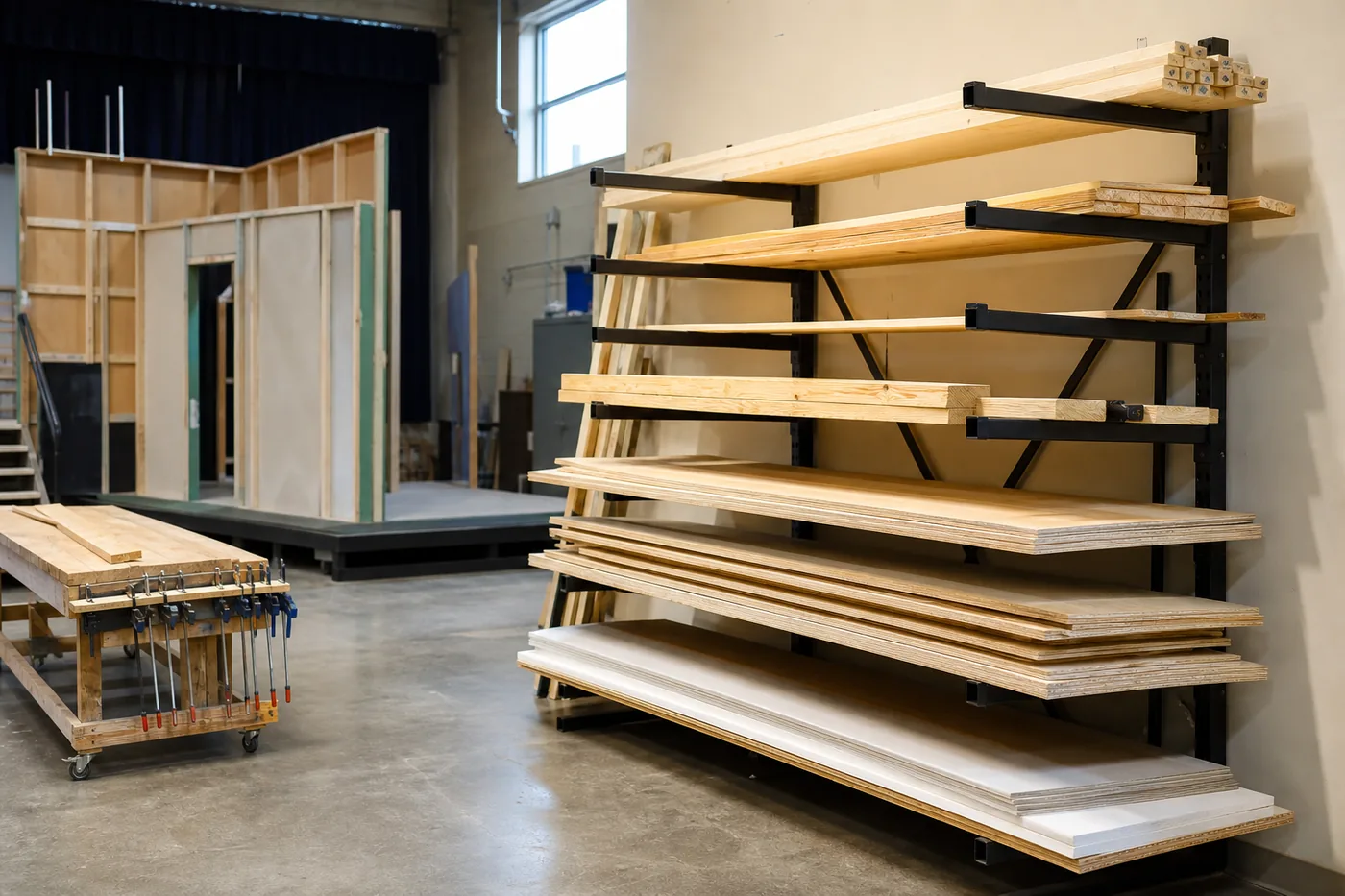 Theater & StagecraftSet construction burns through 2×4s, 1× stock and plywood every production. A compact single-sided rack in the scene shop keeps flat-frame lumber organized between shows and off the shop floor where students work.
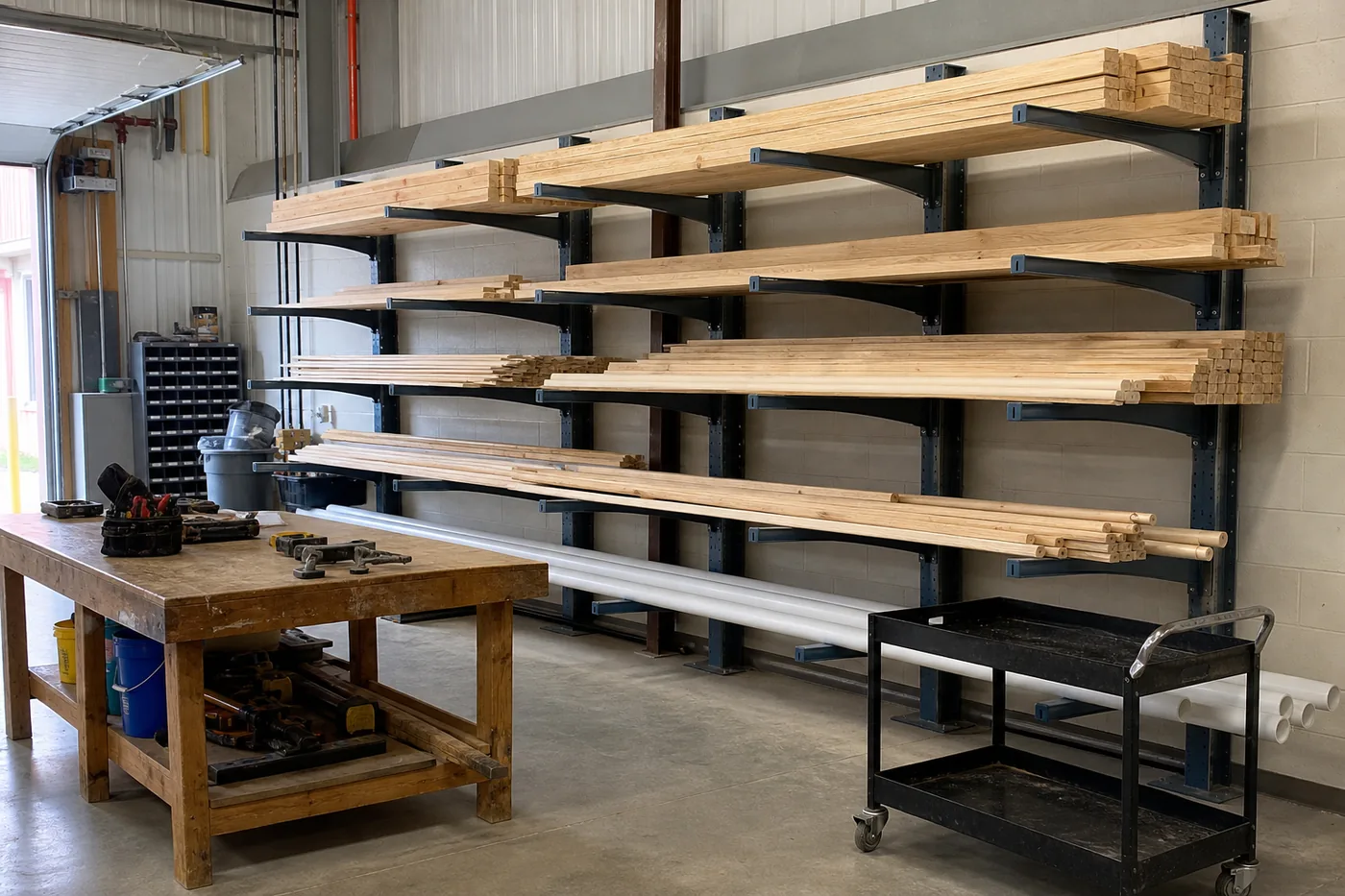 Facilities & MaintenanceDistrict maintenance teams handle door frames, shelving, fencing and small renovations year-round. A dedicated rack keeps their lumber, trim and pipe stock visible, dry and ready instead of leaning in a corner.
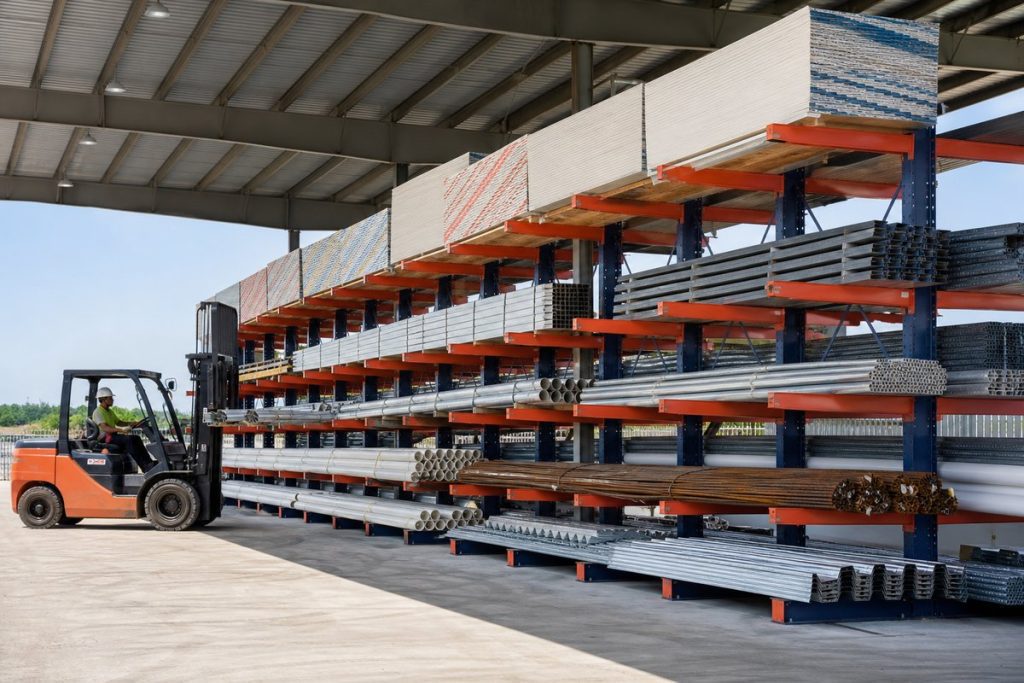 CTE & Construction TradesCareer and technical education programs that frame sheds, walls and full projects need real material storage: full-length dimensional lumber, sheathing and drywall on arms rated for the load.
 District WarehousesCentral district warehouses that stage materials for multiple campuses use longer runs of cantilever rack with forklift access — the same system, scaled up.
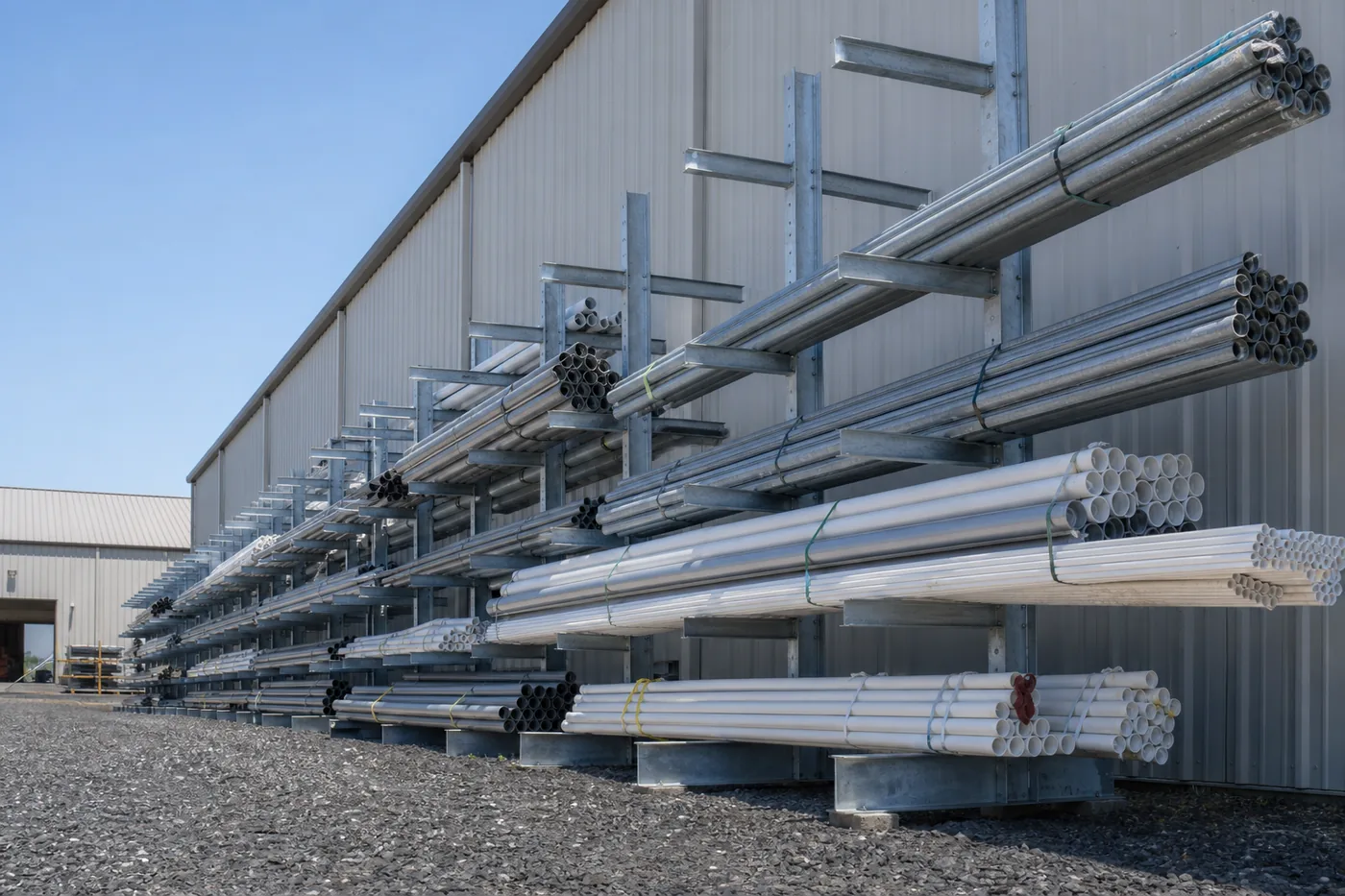 Pipe, Conduit & Irrigation StockThe open arms are just as good for grounds and plumbing inventory: sprinkler pipe, electrical conduit, fence posts and metal stock sorted by diameter and length.
Configurations, Duty Ratings and Published Capacities
Cantilever rack is specified along two axes: single- or double-sided, and duty rating. Schools usually land on single-sided medium duty indoors and heavier rack in district warehouses — but the inventory list, not the building type, makes the call.
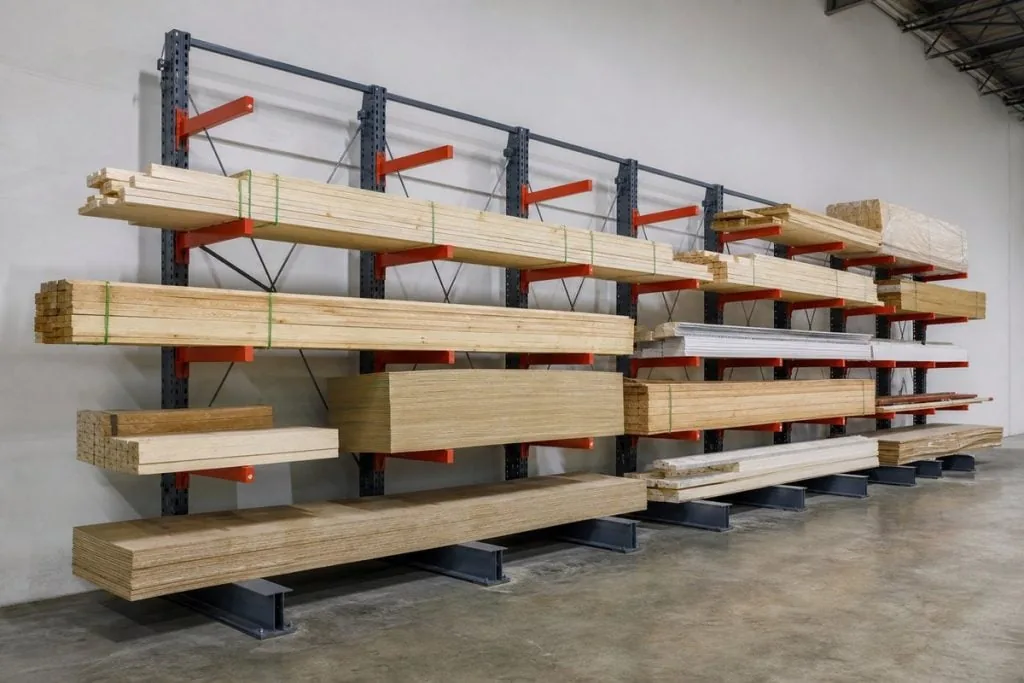 Single-SidedArms on one face; sits against a wall or building perimeter. Keeps the room’s floor open — the configuration used at Roy Junior High. Published column capacities up to 11,200 lbs.
 Double-SidedArms on both faces of a shared column; freestanding in open floor with access from two aisles. Twice the storage per column — up to 22,400 lbs published capacity — for district warehouses.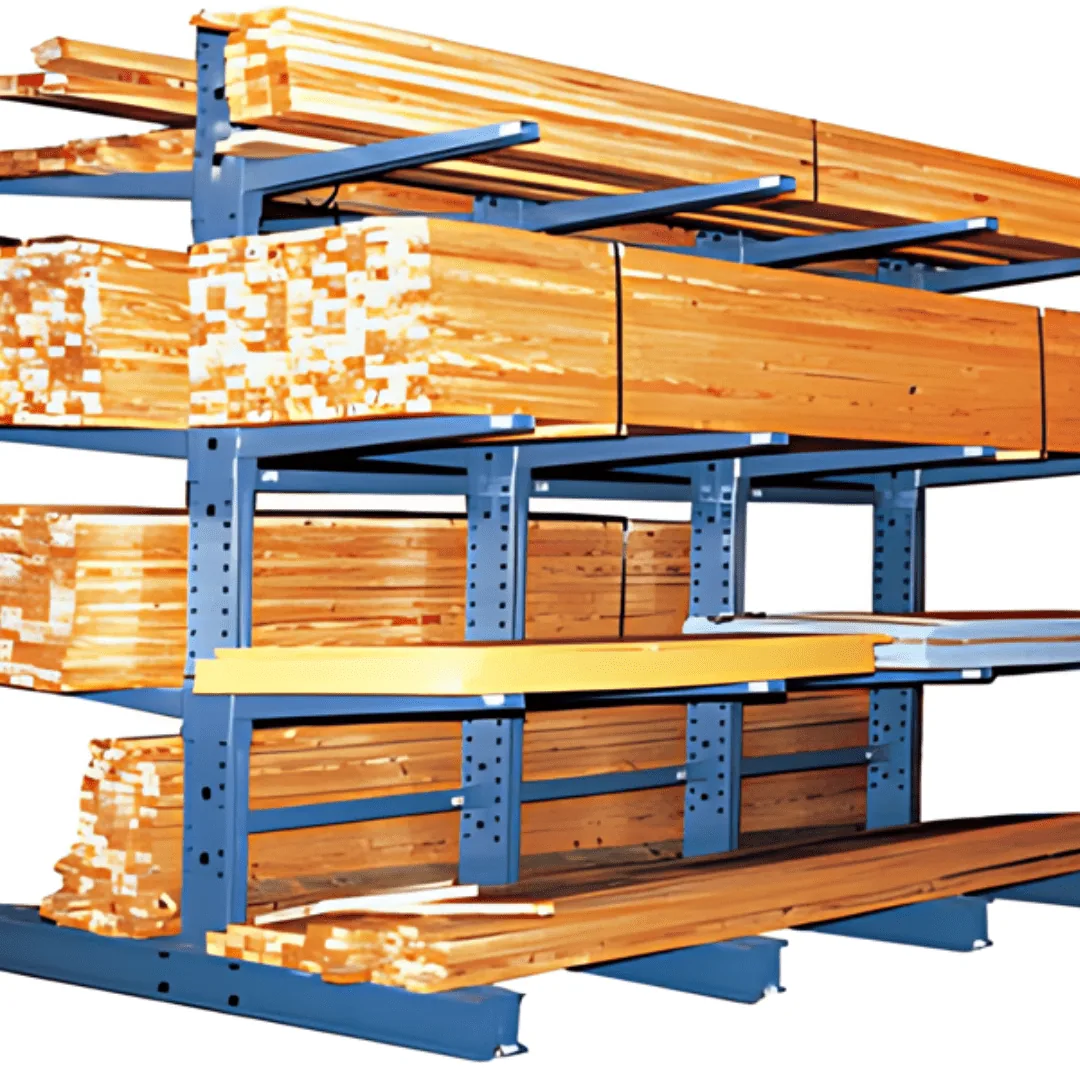
Heavy-duty and regular-duty series
The bolted heavy-duty series uses 8′, 10′ and 12′ columns with 24″, 36″ and 48″ arms in 4° and 20° inclines. Arms reposition in 3″ increments, brace sets come in 3′ to 8′ spans, and damaged components replace individually — no welding, no scrapping the row.
| Series / component | Sizes | Published capacity |
|---|---|---|
| Regular-duty arm, 4° incline | 24″ / 36″ / 48″ | 1,800 / 1,200 / 900 lbs per arm |
| Heavy-duty arm, 4° incline | 36″ / 48″ | 2,050 / 1,600 lbs per arm |
| Heavy-duty arm, 20° incline | 24″ / 36″ / 48″ | 2,200 / 2,050 / 1,600 lbs per arm |
| Single-sided column (8′, 10′ or 12′) | with 24″ / 36″ / 48″ arms | 11,200 / 8,400 / 6,700 lbs per column |
| Double-sided column (8′, 10′ or 12′) | with 24″ / 36″ / 48″ arms | 22,400 / 16,800 / 13,400 lbs per column |
| Brace sets | 3′, 4′, 6′ or 8′ spans | Sized to column height (8′/10′ vs 12′) |

Medium-duty: the usual school specification
The medium-duty series is what most school shops actually need: 79″ tall, arms in 12″, 18″ and 24″ lengths with welded end stops, adjustable in 1½″ increments, in single- and double-sided versions. Sections bolt together in under 10 minutes, which also makes them practical to relocate when a program moves rooms.
| Medium-duty spec | Published detail |
|---|---|
| Height | 79″ overall, single- or double-sided |
| Arms | 12″, 18″ or 24″, with welded end stops |
| Adjustment | Every 1½″ on the column face |
| Assembly | Bolt-together; a section assembles in under 10 minutes |
| Best for | School shops, maintenance rooms and lighter lumber, bar, pipe and trim stock |
Not sure which duty rating fits your inventory?
Lay the system out yourself in the free online designer, or call and read us your lumber list — we will size the arms and columns to it.
Open the Cantilever Rack Designer See All Cantilever Systems Call (800) 326-4403
Planning and Installing a School Cantilever System
Measure the space
Wall length, ceiling height, door and aisle clearances, and where carts or forklifts need to move.
List what you store
Types, lengths and rough weights of lumber and sheet goods. This sets arm length, spacing and duty rating.
Get a layout and quote
We design the rack to the space and the inventory, and provide the documentation school purchasing needs.
Install and train
Anchored, braced installation plus simple loading rules the shop teacher and maintenance staff can enforce.
The structural details that matter
A cantilever rack carries its load away from the column, so the engineering problem is overturning, not just crushing. That is handled in the base and the anchors: bolts that resist uplift, bases sized to the arm loads, and bracing that ties the columns into one rigid row. Slab thickness and condition are checked before anchoring — and along Utah’s Wasatch Front, seismic behavior is part of the design review, because a tall narrow structure with cantilevered loads responds strongly to ground motion.
We also plan around the school calendar. Installation is scheduled for breaks or after-hours so anchoring, bracing and loading happen without students in the building, and the handover includes the posted capacities and loading walk-through.
What to have ready for a quote
- Room or wall dimensions, ceiling height and door clearances
- The lumber list: types, lengths and rough quantities (photos of the current pile help)
- Who loads it — by hand, cart or forklift — and how often
- Floor construction if known (slab thickness matters for anchoring)
- Any purchasing requirements from the district office
Cantilever Rack for Schools: FAQs
What is a cantilever pallet rack?
Why should a school use cantilever rack instead of stacking lumber on the floor?
What duty rating does a school shop actually need?
Single-sided or double-sided — which fits a school?
Is cantilever rack safe around students?
Does Utah’s earthquake risk change the design?
How does purchasing work for a school district?
Can we lay the system out ourselves first?
Related Products & Resources
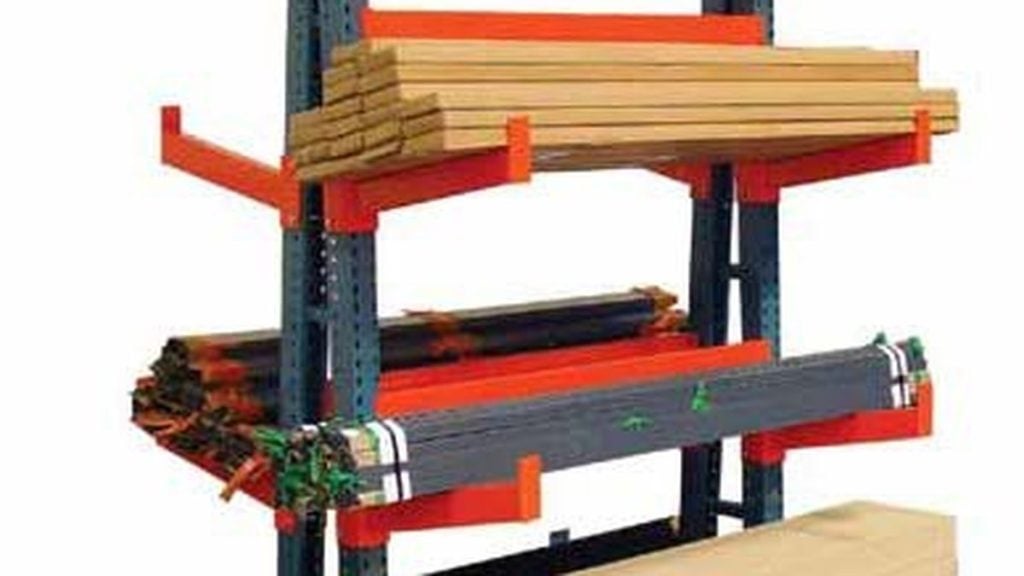 Cantilever Rack SystemsThe full cantilever line: configurations, arm planning, installation and applications for every industry.
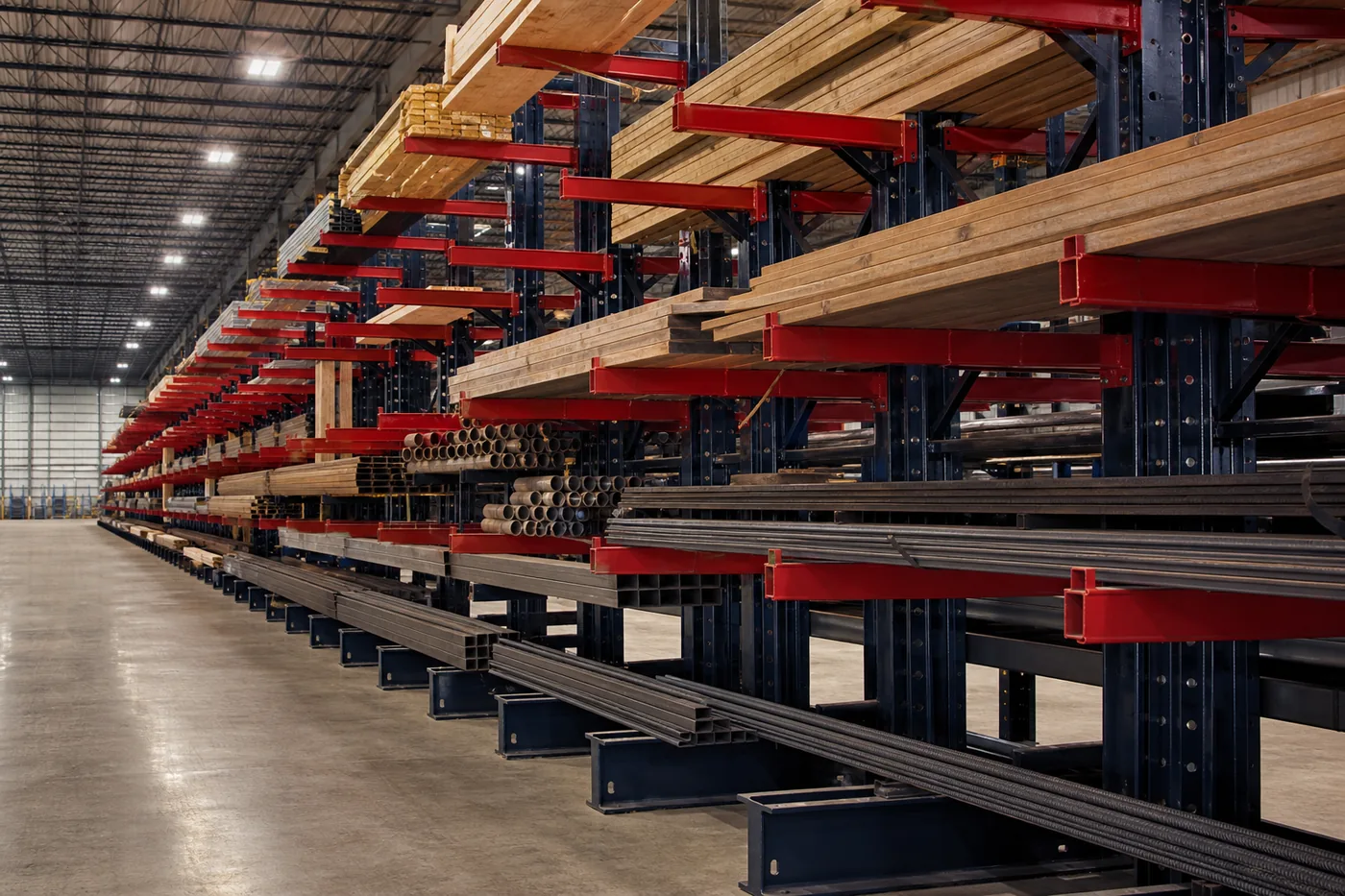 Cantilever Rack DesignerFree online tool: set your lengths, levels and configuration, then send the layout to our team for a quote.
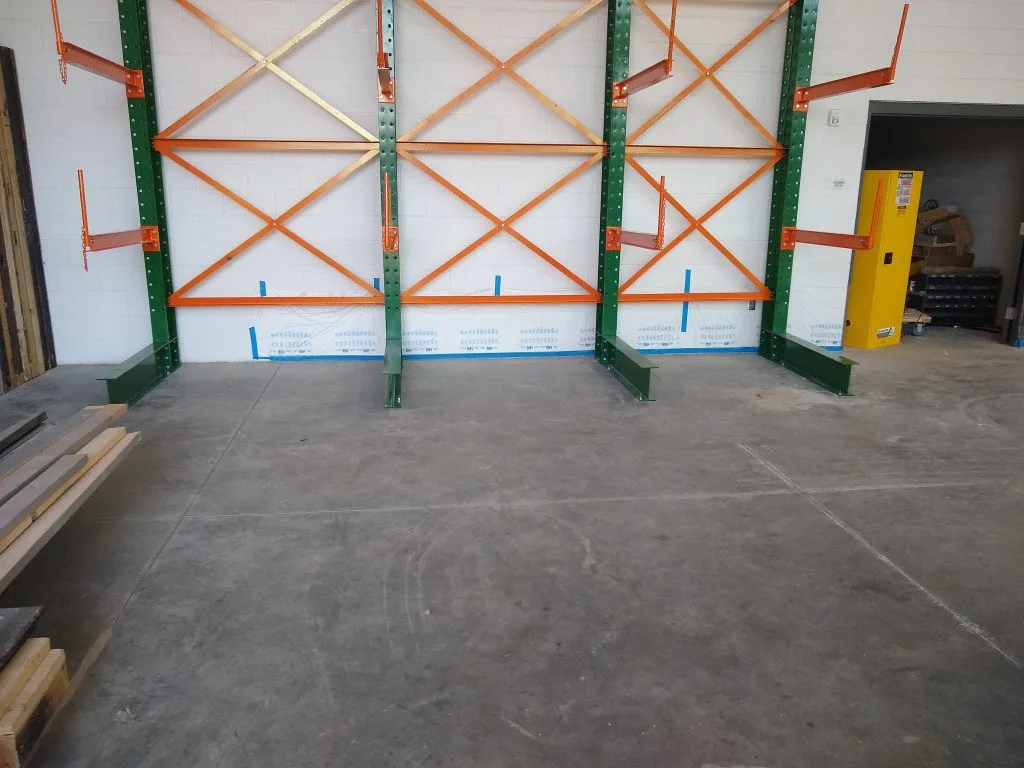 Cantilever Rack for a Utah High SchoolThe sister project: the same wall-line cantilever approach applied to a Utah high school’s storage.
 Cantilever Rack for Roofing SuppliesHow the same open-arm storage handles roofing materials — another real cantilever project.
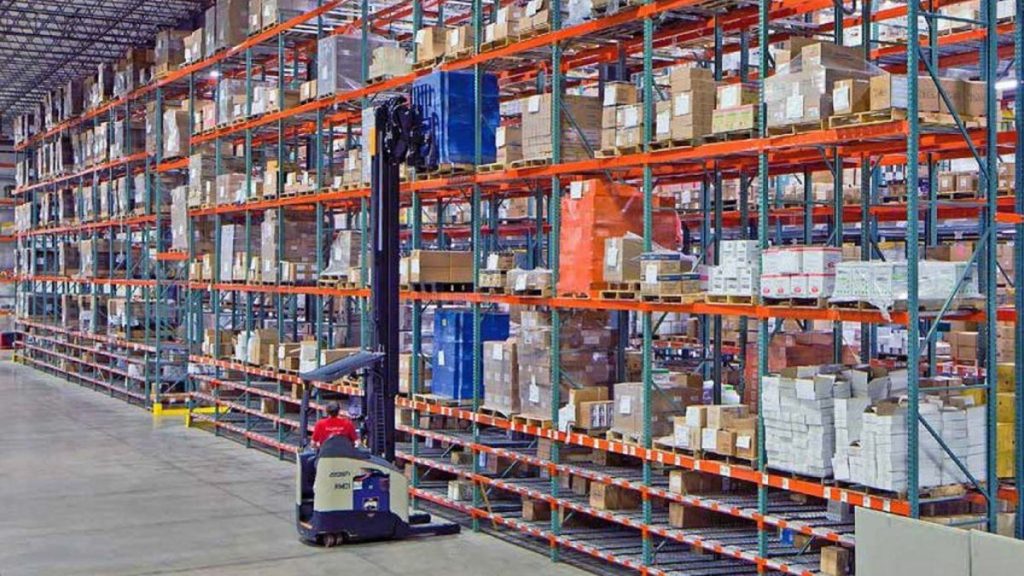 Pallet Rack SystemsSelective, drive-in, push-back, carton flow and more — the complete racking line for palletized storage.
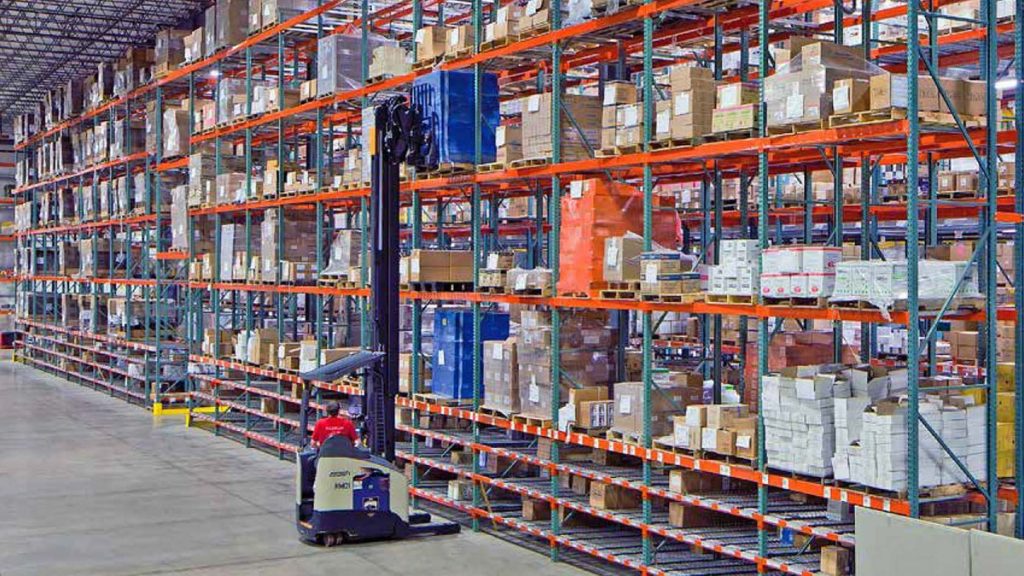 Pallet Rack in UtahLocal design, supply and installation across Utah, from Ogden and Roy to Salt Lake City and Provo.
Get Your School’s Lumber Off the Floor
Free design consultation for schools and districts: send us your room dimensions and lumber list, or call (800) 326-4403. We design, quote and install cantilever rack sized to your inventory, your space and your purchasing process.
Ready to configure your pallet rack system?
Use our guided BuildQuote tool to choose the right configuration, review your parts and submit it for checkout or a formal quote.